Friday, March 31, 2006

Keep On Remembering

Today’s lesson continues studies in Luke. In Chapter 22, we see three very much related events: The Lord’s Supper followed by the Disciples’ not getting it at all and arguing over who would be the greatest. This is followed by Peter’s statement of how faithful he would be for Jesus and Jesus reminding him that Satan want him and that he in fact, would fall three before “the cock crows.” We’ll see later why these are so interrelated.

The Supper Is More Than a Ritual (Luke 22:14-20). See [da Vinci’s Famous “Last Supper]

Communion, Lord's Supper, and Eucharist: All are traditional names for the observance commemorating Jesus' death. Baptists believe that there are two “ordinances” because, while other churches honor more, we traditionally find that only two are mentioned in the Bible: Baptism and the Lord’s Supper. We refer to these acts as “ordinances” because they were “ordained” by Christ, Himself. See Matthew 28:19; 1 Corinthians 11:24,25. Those churches that believe these to be “sacraments” believe that their observance confers grace upon those who observe it. We see them, rather as symbols, powerful symbols, but symbols nonetheless.


There are two different names, which are often used to identify the Lord’s Supper. Some refer it as the “Eucharist” -- which means, “to give thanks”. Before Christ broke the bread, He gave thanks. (This established another tradition of remembrance.) It also means that we are “giving thanks” to God for sending His Son to pay the price for our sins.

Some churches call it “Communion”. This is our English translation of the NT Greek word, koinonia, which means, “fellowship or having things in common, hence our “fellowship suppers.” What we call it is not as important as why we observe it. When He instituted the “Lord’s Supper,” that night, Christ taught His disciples and by extension, us a number of things. Nevertheless, the concept of “communion” runs through the whole of Luke Chapter 22.

Together. What they did, they did together, and it was all in common. Luke 22:14. They were a family. So must we be. We need to remember that because without Christ we have no rudder and without each other, we have no oars. A racing boat without a rudder and oars is not only directionless but it is also powerless. If that describes us, then we are destined to be like Wagner’s “Flying Dutchman” who was condemned to sail the seas forever and never be able to come to port.

Earnest Desire for Us. Christ says in v.15 that he “earnestly desired” to share this with them. A literal translation of the word is “lusted.” “Of course today, “lust” has a very singular and negative connotation, but it nevertheless, describes God’s desire for us and our fellowship. It is the prime reason for His creation of man, in my opinion. Thus, His love for us is a consuming passion. Ours for Him should be reciprocal. Likewise, our passion ( and here I won’t use “lust”) for each other is that each of us comes into that fellowship with Him.

“Broken and Spilled Out.” We all know that the bread and the wine represent His body and blood, “broken and spilled out,” in the words of the Gaithers. But note in v. 17 that these two extremely powerful symbols are to be likewise “given” to be shared by the group [us.] Yet another reaffirmation of His message that we are all in this together – Peter, James, John and you, me and Christ.

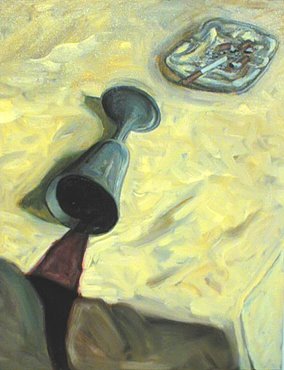
[Matt Cooper’s “Spilled Wine”]

“Remember Me, I’m the One Who Loves You.” By comparison, the Dean Martin song is trite compared to the love of Christ. But the messages ring harmoniously.

Christ says that when we reenact the Lord’s Supper, we join again into the koinonia that empowers us to live our daily lives. More so though, continual remembrance of Him and His sacrifice sets us streaking through the rough waters like the team members of the famous Cambridge and Oxford Boat racers pictured below.


Greatness Comes Through Serving (Luke 22:24-27)
But alas, the Disciples didn’t get it. While the symbolism of His act had meaning to them, they soon forgot it. Can you imagine that – they forgot what Christ had just taught them about being all in this together. We would never do that would we – would we? Ten minutes and three verses later (v.27,) Luke [who wasn’t there, remember] tells us that they devolve into a discussion of exactly who would have the highest office in the new kingdom.

There are three points they missed here. First, there wasn’t going to be a kingdom like they thought – it would be vastly differently – a kingdom of the heart, not a kingdom of the body. He told them that, but it seemed to pass by some how. It’s easy to “not get it” when you don’t want to get it, isn’t it?

Secondly, even if there were going to be some earthly kingdom [which there wasn’t] there would be no greater and lesser people. It takes Peter until Acts 10 to figure out that “God us no respecter of persons.” Paul echoes, “All have sinned. . .” There is no first or last. We are brothers and sisters with God as our Father.

Lastly, assuming arguendo that there would be an Earthly kingdom and that there would be “firsts” and “not firsts” in authority, we still are bound together in that common koinonia, the fellowship of us all – and we are back in the canoe without a paddle. That is what Christ said to remember. All those things, but the fellowship overarching it all.

Satan Wants You to Fail (Luke 22:31-34).
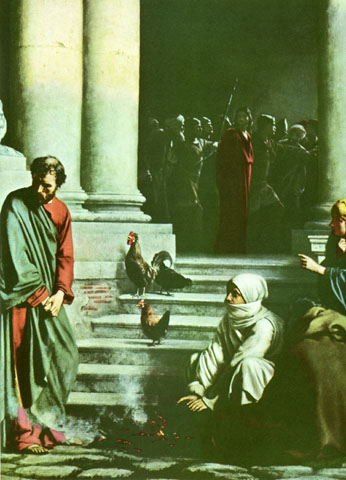
Is it possible for us to remember in the words of the Shema to “love God” and with Jesus’ addition, to “love our neighbor as ourselves?” That is to say, can we in our own strength live in the fellowship that is required to experience the life God has for us? What do you think? Peter tells us that Satan is a “roaring lion” on the prowl just waiting for us to try to do this in our own strength. When we do [note: when not if] we will invariably deny Christ at least three times before the cock crows. And when we hear the cock crowing, Satan will point out our failure just to rub it in. This failure breaks the fellowship, not only with God but with man as well.

[Carl Bloch’s “Peter’s Denial”]

Now for the Good News. The Good News is that Christ intends for this fellowship to be unbroken and He stands more than “ready, willing and able,” rather He stands “lusting,” if I may use that word here, to restore us to fellowship as He did Peter by the Sea of Galilee. And this is something would should remember, too.

So, when we take the Lord’s Supper, Communion, we have a lot to think about, but like so many things Christ has commanded us, that “thinking about” is for our own benefit. Let’s challenge each other to take a fresh look at the Lord’s Supper and remember . . .

Friday, March 24, 2006

Honoring Christ

Today’s lesson, which takes place as Jesus is beginning His final foray into the Holy City, even with its grand-scale events even by modern standards, never the less yields three points that appear small, but in actuality are as grand as the scale of Jesus triumphal display for in them we see the microcosm of Jesus gospel.

Once, Jesus was tested by a Pharisee (Matt. 22:37) who asked, “what is the greatest Commandment?” As we all remember, Jesus replied by quoting the Shema (Deut. 6:5) known and recited by all Jews every day, “thou shalt love the Lord, thy God with all thy heart and all thy soul and all thy strength.” But He adds to it, “. . . and thy neighbor as thyself.” He states that on these two, hand “all the Law and the Prophets,” IE. the totality of God’s commandments.


These two principles run through today’s lesson, which if followed lead to Jesus’ promised “abundant life.”

  • We honor Christ as Lord by Obeying His Word. Luke 19:28-32.
  • We honor Christ as King by praise. Vv. 35-40.
  • We honor Christ by loving our fellow man. Vv. 41-44.

Honor Christ as Lord by obeying His Word. In the passage, Jesus tells certain unnamed disciples to go “over yonder” to the village and get the colt of a donkey and if asked, they are to say, “the Master has need of this.” Two questions come to mind: which village and was this planned in advance or did Jesus, with Godly omniscience just know the donkey was there?

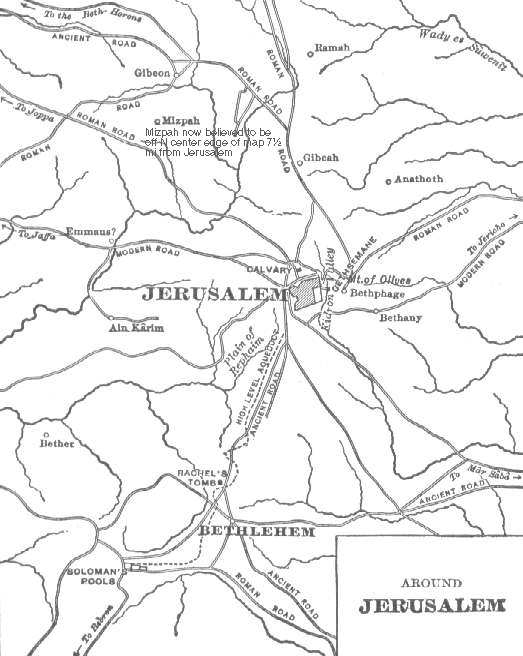
The text of Luke doesn’t really answer either question for us. However, Matthew, recording the same incident says that they were going between Bethphage and Bethany and that they were to go into Bethphage to get to donkey. OK, what’s up with this? Bethany was a small village on the southeastern slope of the Mount of Olives, less than two miles from Jerusalem. It is on the road from Jericho from where Jesus started this trip to Jerusalem, where He will end it. Bethany is a significant little village.

See the following from: Andersen, H.G. "Bethany" The Zondervan Pictorial Encyclopedia of the Bible. Ed. Merrill C. Tenney. 5 vols. Grand Rapids: Zondervan Publishing House, 1976; Gregory, Stewart. Israel, the Holy Land: The Concise Biblical Study & Travel Guide. Jerusalem: Bibleland Workshops, 1987; and Rousseau, John J. and Rami Arav. Jesus and His World: An Archaeological and Cultural Dictionary. Minneapolis: Fortress Press, 1995.

Scholars tell us:

Bethany was the home of Jesus’ special friends, Martha, Mary and Lazarus. Apparently, He and His disciples often visited in their home, probably when they came to Jerusalem for feast days. It is there where Jesus tells Martha, “Martha, Martha (indicating their close friendship), you are worried and bothered about so many things; but only a few things are necessary, really only one: for Mary has chosen the good part, which shall not be taken away from her" (Luke 10:39-42). This is the same Bethany where Lazarus is raised from the dead. (John 11:47-51). It was this event that confirmed and accelerated the Sanhedrin’s plan to put Jesus to death (John 11:45-54).

On another occasion, a week before the crucifixion, Mary anointed Jesus’ feet in the home of Simon the leper in Bethany (Matt 26:6-13; Mark 14:3-9; John 12:2-11). When it became known that Jesus was in Bethany, a "great multitude" came to the village, not only to see Jesus who had raised Lazarus, but also to see Lazarus himself who was, no doubt, the object of much speculation and wonder! This flow of people to Bethany, and the increasing numbers of them who, as result of this sign miracle, believed in Jesus, incensed the religious leaders in Jerusalem. So violent was their reaction that they "took counsel that they might put Lazarus to death also" (John 12:9-11). Again, it was the proximity of Bethany to Jerusalem that accentuated this climaxing confrontation between the Sanhedrin and Jesus.

On the Sunday before the Friday of His crucifixion, Jesus made His formal entrance into Jerusalem, apparently starting at Bethany. Passing near Bethphage, an adjacent village on the Mount of Olives, He requisitioned a donkey for His prophecy-fulfilling approach to the city (Zech 9:9; Matt 21:1-11; Mark 11:1-11; Luke 19:29-44; John 12:12-19.

After His official entry into Jerusalem (the "triumphal entry"), Jesus returned to Bethany with His disciples (Matt 21:17; Mark 11:11,12).

Finally, when Jesus was about to return to His Father from the Mount of Olives, "He led them out as far as Bethany, and He lifted up His hands and blessed them. And it came about, that while He was blessing them, He departed from them" (Luke 24:50,52). This home in Bethany, so often opened to Jesus, now became the place from which He would leave the earth to return to His Father’s "home


Bethphage is only about a mile from Bethany and less than a mile from Jerusalem. While some will assert that Jesus used some miraculous power to acquire the donkey, I choose to follow “Occam’s Razor” which is a principle that states, in essence that given the choice between two competing answers, “the simplest answer is the best.” The simplest answer is that Jesus had some unnamed co-conspirator in the Bethany-Bethphage area with whom He had a pre-arrangement for the donkey with the password being, “the Master is in need of it.” It could be that this unnamed disciple and “co-conspirator” knew much of Jesus plan to enter the city as the Messiah. What an honor for that person to be “in on” Jesus’ great plan!

Be all that scholarly stuff as it may, the most important point is that He told the disciples to do it and they, though obviously not “in on the plan” did it. They could have asked, “why,” but they didn’t. That’s the lesson for us. God has plans, big plans, plans for the world and plans for us. Sometimes He takes us into His confidence and some sometimes He takes other people into His confidence. Sometimes, He takes no one into his confidence. The blessing, though is being in on the execution.

Oh, a small point on this – these disciples knew what Jesus was telling them because they heard it from His lips. We don’t have that privilege any more. What are we to do? We have the broader scope of hearing from God through the Holy Spirit unlimited by our ears and eyes. Henry Blackaby tells us that God speaks to us, “through the Holy Spirit by the Bible, prayer, circumstance and the Church to reveal Himself, His purposes and His ways.” All we have to do is hone our listening skills and listen for the Word – then do it and be blessed.

We honor Christ as King by praising Him. As alluded to in the previous section, Jesus was planning a triumphal assault on Jerusalem. He had over three years revealed more and more of “Himself, His purposes and His ways” to the people, first hinting and now finally stating clearly and openly that He is the Messiah, the promised one, the God in Man.

He gives them increasing and now final opportunity to accept that – but they refuse. In aid of that plan, he uses a time-honored technique of the prophets. When the people would not heard the mere words, the prophet, under God’s leadership, would do some dramatic act to get their attention. Remember, Hosea marrying the harlot and Jeremiah breaking the bowls in the Valley of Hinnon and wearing the stocks? Likewise, Jesus fulfills, in intricate detail and clearly by design, the prophesies about the Messiah – in this case the triumphal entry foretold in Zachariah, supra.

Here, Jesus proclaims Himself “King of the Jews.” The disciples respond appropriately by spreading the cloaks on His saddle and on the path ahead of Him (remember Sir Walter Raleigh, where do you think he got that poetic idea?) In so doing, they proclaim Him as king. To do so, is not merely to partake of a display, to acknowledge a king, one must recognize that He is greater than you are. It is that recognition of His greatness, IE. praise, that is vital to our ability to follow his instructions without question. We must “lose ourselves” in His greatness. To the extent that we are able to do that, we can receive the blessing of the promised “abundant life.”

We honor Christ by loving our fellow man. On the way in, Jesus stops and weeps over Jerusalem. We see here a clear picture of how God feels when we disobey Him. This is not because He is offended or has hurt feelings, this is because he knows how much suffering and disappointment we will bring on ourselves by our disobedience and He is sad about that. Thus, in Matthew’s simple but poignant words, “Jesus wept.”

Jesus said that if we truly love God, we will love our fellow man. I would submit that one who does not love his fellow man does not really love God. If that is the case, then we are back at the beginning which is that if you don’t do what He says, you don’t love Him. And if you don’t love Him, you rob yourself of the blessing that He promised –abundant life. To illustrate the point, I close this piece with one of my favorite poems: “Abu Ben Adam” by James Leigh Hunt.

Abu Ben Adam, may his tribe increase, Awoke one night from a deep dream of peace.
And saw, within the moonlight of his room Making it rich, like a lily in bloom,
An angel writing in a book of gold. Exceeding peace had made Abu Ben Adam bold
And to the presence in his room he said, ' What writest thou?' The vision raised its head, And with a look of all sweet accord Answered: 'The names of those who love the Lord. 'And is mine one?' said Abu. 'Nay not so' Replied the Angel. Abu spoke more low, But cheerily still and said, 'I pray thee then Write me as one that loves his fellow-men.'
The angel wrote and vanished.
The next night it came again with awaking light, And showed the names of whom love of God had blessed. And lo! Ben Adam's name led all the rest.

Friday, March 17, 2006

Celebrating Forgiveness

T his week's lesson continues the study in Luke, Luke 15:1-32 (with some deletions.) Last week, Jesus was teaching us about prayer. This week about compassion, forgiveness and self-righteousness. In last week's note, we looked at a little about the Book of Luke; this week, a little more detail about the book will help enlighten the words.

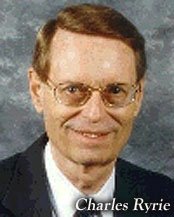
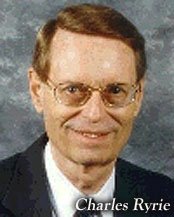
The great Dispensationalist, Dr. Charles Caldwell Ryrie, Chairman of the Department of Systematic Theology at Dallas Seminary outlines Luke for us. The mere outline is quite instructive because it lays out where Luke believes Jesus was going with His life, ministry and mission. Ryrie tells us that Luke's theme is to show the humanity of Jesus, the Son of Man. As I stated last week, Luke's interest in the human may well be related to his caring nature as a physician, the Beloved Physician, and to his artistic nature.

Ryrie outlines the Book, in para materia:
1.Method and Purpose of the Book
2.The Identification of the Son of Man with Men (1:5 - 4:13)
3.The ministry of the Son of Man to Men (4:14 - 9:50)
4.The Repudiation of the Son of Man by Men (9:1 - 19:27)
5.The Condemnation of the Son of Man by Men (19:28 - 23:56)
6.The vindication of the Son of Man before Men (24:1-53.)

Today's session is right in the middle of Section 4, the Repudiation. In this section, we see Jesus systematically rejected by various groups including the Scribes and the Pharisees. Then we come to a subset of Dr. Ryrie's outline at 12:1 - 19:27, entitled: "Instruction in light of rejection," ie. how the followers should behave while being rejected. In this subsection are found Jesus teachings, sometimes via parables, on hypocracy, covetousness, faithfulness, repentance, hypocracy (again,) forgiveness and several others.Luke tells us that Jesus was the Son of God, but also a man: that He ministered to men but was rejected by the very men to whom He ministered, rejected unto death; but that ultimately He andHis Message are vindicated as He arises from the grave as He said He would do.

Throughout the repudiation period, the leaders of the repudiation were the leaders of the Jewish people, the Scribes and the Pharasees.The Scribes were a professional class of men, a learned group schooled in the Law of Moses, the Torah and the Talmud, which amounted to the "regs." as we bureaucrats would say, developed during the period of the Babylonian captivity in the Fifth Century B.C. It was their job to know the law, every *"jot" and "tittle," and to interpret it strictly. They worked closely with the priests and thus exercised great political authority over the people.

Likewise the Pharisees had great sway over the people. They were a group that began to develop in the captivity but grew afterwards. They started as men who wanted to, themselves, live holy and pleasing lives before God; a noble ideal - but it went awry when many became so self-absorbed with their own righteousness, that they lost the concept totally. The were the "Democrats" to the Scribes' "Republicans." The two groups didn't agree on much, especially theology which is why their union against Jesus was so interesting.

Jesus loathed the practices of both these groups and He was most critical of them both. He decried their control of people's lives and self-centered nature. What He disliked most was that these two groups were leading the People of God astray. "Blind guides," He called them, "you lead the people into the ditch with you!" "Woe to you, lawyers (scribes,) hypocrites!"One school of though concerning Jesus' ministry is that as He observed these things, He purposefully set out to lead the people away from their teachings and leadership. Many others had tried, and all failed. Thus, so this school of thought has it, Jesus set out in calculated manner to take on these two groups until their own evil ultimately manifested against Him would be their own undoing. If that is so, then his comments against the Scribes and Pharasees were designed to lead them to the conclusion to which they reach about Him and thus seal His death. In death, He knew that God would overcome their evil as He conquered death, Hell, the grave and the leadership of "blind guides."

These two groups figure in today's lesson - in the background, but they are there. Today shows us two of three parables Jesus taught in this passage which illustrated the lostness of the common man, the love of God and the hypocracy of these leaders. The deleted parable is that of the "Lost Coin." Of this trilogy, Barclay says that there is no more loved chapter in the Bible. He calls it the "Gospel of the Gospel." These parables arise, as Barclay says, out of a real life situation that was unique to Jewish culture - the dichotomy of the "sinner" and the "righteous" as they defined sin and righteousness. We have already discussed the orthodoxy of the Scribes and Pharisees, but now we look at the "sinners." Don't think here in terms of what we in the 21st Century might call sinners, that is to say, people who do evil deed, criminal or immoral persons. No, to the "righteous" Jew, "sinners" were "the people of the land," the unorthodox. The Talmud (remember, the "regs.) held that if you wanted to righteous, there must always exist a separatin between the righteous and the "people of the land." There should be no socialization, no conversation, if possible no business dealings. There was a deliberate teaching to avoid those people at all costs. And who were those people? Their "sin" was not keeping the "regs." It is true that numbered among the sinners were the criminals and immoral, but those men existed among the so-called righteous as well. These were as a group, the people who were excluded from the temple because they were sick or lame or blind or in some way ceremonial impure. Further, many occupations by their nature rendered one a "sinner" because they were unable to keep the laws. For example - shepherds.

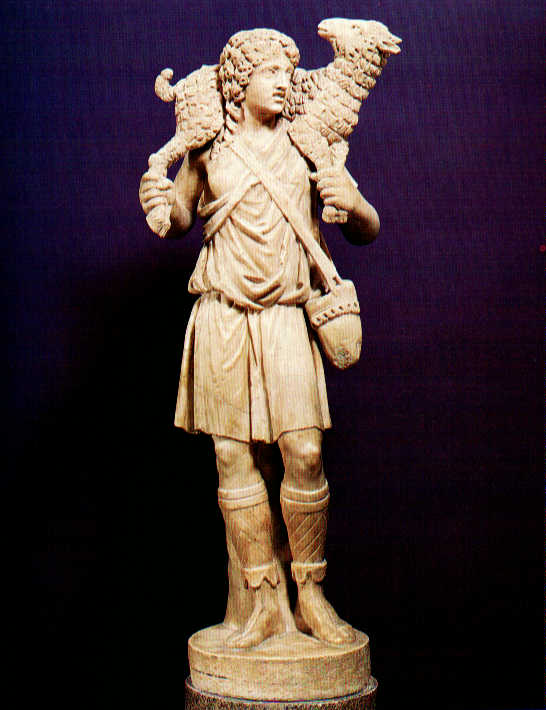
1. Show Compassion - The Parable of the Lost Sheep . Luke 15:1-7."Shepherd" brings us to that first story in vv. 1-7. In this story, Jesus makes the shepherd to be the hero of the story. That alone would irritate a good Pharisee. Jesus makes the point more so by being the "Good Shepherd," a phrase that would be an oxymoron to a Scribe. Of course, Jesus, the "Good Shepherd" is the shepherd of the story. Through His bravery and courage, he seeks out at personal cost and finds even one sheep (sinner) that is lost. The picture of a communal herd of sheep, owned by several people perhaps shepherded by more than one shepherd. At the close of the day, the sheep are rounded up to take to the sheep-fold to keep them safe at night from predators - lions and bears (both of which David encountered and killed.) At the head count, one is missing. The Good Shepherd tells the other to drive the sheep home and he will find the lost one. As the other shepherd comes into the village, he would tell the people that there was straggler and his buddy was out looking for it. The people of the village would have been interested in this and would be waiting to see what would happen.

Then we see the picture of the brave shepherd striding over the hills with the sheep on his shoulders, bringing him home to the shelter of the fold. Why on his shoulders? That's the way you carry sheep at a distance - it's easier that way. The people would see this and all be relieved that the one lost is found. It is likewise a cause for applause in Heaven when one of us real-life sinners is brought home, saved from the "roaring lion" by the Good Shepherd.Jesus summarization of the point of the story has a "barb" in it. In the story, the lost sheep is a sinner, but the good sheep are the "righteous" who "have no need of repentance." The point is that there is no such person! "All have sinned and fall short of the glory of God," says Paul. Thus hidden in the story of the love of the Good Shephered is the kernel of the self-rightousness that will grow and blossom in the final story of the trilogy.

2. Celebrate Forgiveness. Luke 15:11-13, 22-24.
As we said earlier, we are skipping over the parable of the lost coin. However, we should point out that the parable teaches us that while there is joy in Heaven when a "sinner" is brought home, God Himself is jubilant. It is important to note from this the depth of feeling that God has for us - each of us. And like all of us who have loved and lost, God knows to intense feeling of having tlinegiven Himself, His very life, for the sinner, that sinner ultimately choose to repudiate Him. Jesus is sending that message to the Scribes and Pharisees as well - their rejection of Him is a rejection of God, a rejection that breaks the heart of God.

This would have come as a shock to His audience who would not have historically pictured God in that manner.The theme is carried on in the parable commonly called the Prodical Son. Barclay urges that it should rather be called "The Loving Father," as it is all about the love of the Father. This, likewise is a Bible story known and loved by most people, Christian or not. The point for our purposes is that God, Himself loves us enough to allow us to go off and "seek our fortune", giving us , as it were, an advance on our inheritance.

Under the Mosaic Law (Deut.21:17), since the oldest son must receive 2/3 of the estate after the death of the father, the younger would be entitled to 1/3 - entitled after the death of the father.Knowing that we will fail, but knowing that we must choose to come back to Him to really love Him, He all the more rejoices when the prodical returns to the extent in the opposite direction He has grieved when the Prodical was lost. Who is the prodical? Of course he is you and me. Each of us seeks our own self-satisfaction and we go our own way seeking our own way. What's the result? Ending up in the pig pen. The only way out is to humble ourselves by realizing that we cannot save ourselves and turn our lives over to this Loving Father to do with us as He will. And what is His will - that we be a hired hand? No, from the parable we see that God receives as a son. He puts a ring on our finger, a robe on our shoulders and shoes on our feet. Yes there is joy in Heaven when one lost one returns - all the more so, there is joy in the heart of the Loving Father. Lincoln was asked how he would treat the rebellious Southerners after the war. Of course vengeance would be in the mind of most. However, Lincoln replied, "I would treat them as if they had never left." In fact, after the surrender of Lee at Appomattox Court House in April of 1865, rather than calling for a great victory ball with appropriate dance music, Lincoln asked the Marine Band, crimson jackets and all to play the song, "Dixie" as a lament for all those who were lost.

3. Reject Self-Righteousness . Luke 15: 28-32.
There is a dark ending to this story. In the background lurk the Scribes and Pharisees who are not jubilant when a sinner comes home. This defies their tradition and thus upsets their theology. That made them uneasy at heart. Perhaps more importantly, it threatened them, their power and their position. This was a point not lost on Jesus when He puts them in the story as the "Other Brother." Jesus pictures this brother as brooding, having fulfilled the Law - every *jot and tittle but wanting complete control. In short, they were selfish and self-righteous. It is this self-righteousness that was perhaps their greatest sin because it keep them separated from God. If your heart is full of you, there is no room for God. The old preacher once said, "you can't get a man saved until you get him lost." In his mind, that is. The Scribes and Pharisees did not know they were lost. That ignorance would separate them eternally from God. Worse for the people, they led the great "unwashed masses" to believe that lie.
Jesus' great point in this is not only that self-rightousness is abhorrent to God, but it does in fact lead us to our own destruction. You see, despite what the Scribes and Pharisees taught, none of us is the other brother, the joyful villager, the "righteous." We are , rather the lost sheep, the lost son and the lost coin - lost. Only when we allow Jesus to find us and carry us back to the Father on His broad Good Shepherd shoulders are we able to accept the "robe and the crown" given to the returning prodical son.Revelation tells us what we ultimately will do what that robe and crown. We will not wear them proudly in Heaven on our chest like the battle ribbons of the brave soldier no, we will "lay them at the feet of Jesus." Only He is worthy to receive them.

End note: "Jot and tittle. These are elements of characters in the Hebrew alphabet. The jot is the little curl mark at the corner of the character and the tittle is the straight line across some characters. They would equate to a dot on the "I" and the cross on the "t."

Saturday, March 11, 2006

Keep On Praying


When I played football for the Brantley High Bulldogs, we always huddled up before each game and said the Lord’s Prayer. Then we went out to kill our opponent – or at least do as much serious bodily harm as we could. We recited that prayer because our coach, Coach Orville Eubanks was a good Methodist and a man of prayer.

Well, what is it that prayer that is so special? What makes it better than the Prayer of Moses or the prayers of David or the “Prayer of Jabez?” The answer is that it came from Jesus, Himself, thus from the mouth of God to our ears! Perhaps we ought to hear it.

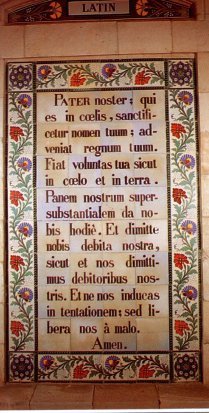
The version in today’s lesson of the Model Prayer or “Lord’s Prayer” is taken from Luke 11. Luke gives us a shortened version of the longer prayer that Jesus prays in Matthew 5 as a part of the Sermon on the Mount. The famous prayer is also known as the Paternoster, the “Our Father.” As recited, it would be
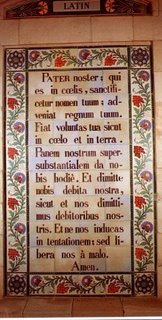
Pater noster,¨ qui es in caelis,¨ sanctificetur nomen tuum:¨ adveniat regnum tuum:¨ fiat voluntas tua, sicut in caelo, et in terra.¨ Panem nostrum quotidianum da nobis hodie:¨et dimitte nobis debita nostra,¨ sicut et nos dimittimus debitoribus nostris.¨Et ne nos inducas in tentationem:¨ sed libera nos a malo. Amen.

But before concentrating of the Prayer, let’s look briefly at Luke, the book. While Matthew was one of the Twelve and wrote his book addressed to the Jews, Luke was Gentile, in fact the only Gentile privileged to be included as a writer of the New Testament. Tradition has it that Luke, who as we all know was a doctor, was also a skilled painter, thus he would have had an eye for beautiful things. Perhaps for this reason, Barclay in The Gospel of Luke calls Luke the “Lovely Gospel.” Luke is without a doubt a universal gospel addressed to all people. It portrays Jesus as the Blessed Sacrifice. Luke is a gospel that takes special note of the acts of women (an uncommon idea in that day), takes special note of the importance of praise to God, takes special caring note of sinners, outcasts and the poor and, for our purposes here takes special note, with the historian’s care, of the prayers of Jesus.

Luke demonstrates the importance of prayer in the life of Jesus: at His baptism (3:21); before doing battle with the Pharisees (5:16); before questioning the disciples as to His identity and the first prediction of His death (9:18); at the Transfiguration (9:29); and on the cross (23:46.) Interestingly enough Plummer points out in his commentary, that up until this point in the Gospel of Luke, the emphasis is on the prayer life of Jesus. After here, we begin to see the prayer life of the disciples emerge and come to full fruition in Acts, also of course written by Luke. Thus, we see the prayer continuum.

Today’s lesson takes the Model Prayer and holds it out to us as just that - a model. In summary, Jesus teaches his disciples and us, that indeed we should pray and “as you pray,” pray intentionally, pray persistently and pray expectantly.

In an Internet article entitled “Jesus on Prayer” by Dr. Donald T. Williams, in a sermon presented at Trinity Fellowship, Dr. Williams wonders why though prayer is so often urged on us, we have such difficulty in doing it. He suggests as an answer that perhaps we are viewing prayer wrongly.

Prayer at its best is a dialogue, a conversation between us and God. Did you hear that – between lowly us and the God of the universe? Though this is true, it is difficult, to keep this in mind. When we have a conversation with a friend, we get “feed-back.” Dr. Williams observes:
[t]hrough words, tone of voice, facial expression, and body language I have objective evidence of how my friend feels about what I have said--or whether she is even listening. With the invisible God there is none of that. To believe that prayer is more than a monologue requires a constant exercise of faith.

And failing that, we launch into the monologue of requests. I fear that sometimes such praying, though good is not the best because it seems that the focus has been on those things that we need or want to get from God and that can certainly be seen that as selfish praying.

Perhaps my impression of this type of prayer is influenced by my studying philosophy at the University of Montevallo with Prof. Hendrick Van Tuyll, a Dutch Baron and last of the old world philosophers. (We think Dr. Van Tuyvll actually studies with Immanuel Kant.) Dr. Van Tuyll was a minister in the Dutch Reform Church and taught that our prayers should always be prayers of recognition of God and praise and thanksgiving to Him. Dr. Van Tuyll believed that since God of course, already knew what we needed and wanted to give us what we needed and not what we wanted, then the thing to do is trust those things to God and not spend much time praying on it.

Well, be that as it may, perhaps we ought to spend the time on the totality of prayer, not for God’s benefit but for ours. I submit that we need to go through the exercise of prayer because in the honest, fervent prayer, God will speak to us (thus the dialogue) and set our thinking aright, thus adjusting our “wants” to our real “needs.” When we learn to distinguish those two things, we begin to have in us the “mind of Christ” about which Paul speaks in Philippians 2:5. Besides which, Jesus clearly and unabashedly teaches us to, as Paul would put it also in Philippians (4:6), “by prayer and supplication with thanksgiving, make your requests known unto God.”

Pray Intentionally (Luke 11:1-4).

Why did the disciples ask Jesus to teach them to pray? Were they not good Jews who prayed three times a day already? For starters, there was custom of the Jewish students that their Rabbi should give them a special prayer that distinguished his particular teaching. They were quite familiar with John the Baptist, indeed some may have previously been disciples of John’s. He taught them to pray. They follow that custom here.

If this passage comes, as Matthew has it, in the Sermon on the Mount, then they would have recognized in Jesus a man of great oratorical ability that to them equated to great spiritual power and knowledge. Secondly, they have recognized in Jesus a prayer life that was different from that to which they have become accustomed. As I stated earlier, these is no particular indication that the disciples were great men of prayer. It may be that they recognized this as a deficiency in their lives. So, in the Jesus-commanded child like open-mindedness, they say, “teach us to pray.”

Perhaps the over-riding thought here is not so much how you pray but THAT you pray. I would submit that as you pray in sincerity, God will lead you to “pray aright.” .

Bob Diffinbaugh from Dallas Theological Seminary, in his work on prayer points out that the prayer Jesus gives in vv. 2-4 is merely the skeleton of a prayer. We can then take this not as the “end-all, be-all on prayer, but the highlight of supplication. This is teaching on supplication. In other places we see Jesus giving examples of prayers of intercession. Perhaps, before we can intercede for others, though we must first understand what prayer is. Here Jesus teaches about the most basic form of prayer, that of supplication. But as we will see in the analysis of the prayer, Jesus has a method in His teaching. Jesus is saying “when you pray [make your requests known unto God, as Paul would say] do it this way.

This little piece of a prayer, then can be summarized as follows:

“Our Father which art in Heaven. . .” Acknowledge the relationship that God is Abba-Father, and Father of us all, yet the “Heavenly Father” who exhibits all the attributes of God.

“Hallowed [holy, blessed, set apart, different from everything else in the universe] IS (KJV uses “be” but not in the sense of some future hoped for event but in the sense of a present reality) Your name." Here we are recognizing that God is God and we aren’t. He is infinitely greater than we and that realization is the sine qua non to setting us on the path to right thinking and right “supplicating.”

"Your kingdom come, your will be done in Earth as it is in Heaven.” Request that His Kingdom [the “mind of Christ” will come [in your heart] and when it does He will begin to adjust your heart to conform it to His heart. When that happens, your will must be lost in His will and He will likewise adjust your way of thinking and viewing.

“Give us this day our daily bread.” Voice your requests to your Father. Here is where the listening comes in. As our will is lost in His, our wants and desires, the daily needs of life, will be matched to His desires for us and we will see His will done. We will receive that which He wants to give us and we will be satisfied with it because now it has become our desire as well.

“Forgive us our debts as we forgive our debtors.” Here enters the confession. As we are praying to be forgiven of these sins, we must confess them and then ask for forgiveness of sin, and

“Lead us not into temptation.” Plead for protection from [falling into] temptation realizing that temptation is a wolf always at the door. That is to say that we should ever be mindful that temptations or “tests” will come, not that God “tempts” us to do evil, but that tests will come. The prayer here is that we pass the test. The way to pass the test is related to the foregoing parts of the prayer. Allow the “kingdom of God” in our hearts and recognize that we are weak and that we will only keep above sin by God’s provision to us .

“But deliver us from [the Evil One.]" One commentator states that “we must be praying for insight into the evil that we, as good people with good intentions, might nonetheless do, and also for the strength to confess our sin, to repent, and to forgive others.” 1 Peter 4:7 tells us that Satan roams the Earth like a “raging lion seeking whom he may devour.” Our prayer here is that we will allow God to give us, as He wants to, a view of evil influence and then allow Him to keep us above that influence in our lives, something else He always wants to do.

Pray Persistently. (Luke 11:5-10) Jesus moves on to explain Himself further to make sure they get the point. He wants them to [and they, and we need to] pray persistently. Jesus follows the skeletal prayer with a parable, one that would be familiar to Jesus’ disciples. At certain times of the year because of the heat at mid-day, travelers often traveled at night. A friend has arrived in the middle of the night and the host needs food to feed him. Remember the time and the custom of the area. Since there were no Holiday Inns or even Motel 6s to “leave the lights on for us,” hospitality was a sacred duty. The host had to get some food – but the cupboard was bare, perhaps as bare as his poor Palestinian house with one room and an earthen floor covered with dried reeds or rushes.

The neighbor has bedded down for the night with all the family literally no more than arms length away. Perhaps some of the livestock was also in the house. To be disturbed was a major annoyance in that day and age. Nevertheless, the erstwhile host petulantly asks and asks for a handout until he achieves success and is satisfied. Jesus uses this parable a “story laid along side a truth” to illustrate the truth. In like fashion to many such other parables He uses the a fortiori argument (as we lawyers would say) arguing that though the thing requested is given by the annoyed neighbor, how much more so does our Father in Heaven give to those whom He loves. – if we persist in prayer.

Jesus follows the story with the famous quote, that to whoever [keeps on asking] it will be given – whoever [keeps on] looking will find and to whoever [keeps on] knocking, the door will be opened. The consistent clause here is demonstrated in the tense of the words written in the Greek [uttered by Jesus in Aramaic] which supplies the “keeps on” before the verb. There is a favorite children’s story that we used to read to our daughter, Amy when she was little, B. Shackman Company’s version of the antique original children’s bedtime story by Harry Frees, “Four Little Kittens,” whose chief characters are: Fuzz, Suzz, Buzz, Agamemnon. In the book, the kittens learn that “perseverance pays off.”

This concept, though does raise a couple of questions about prayer: if God is omniscient, and He is, then why must we make our wishes or supposed needs known to Him and secondly, if He is omniscient, and He is why must be persistently ask Him for things? Perhaps the answer lies in the mechanism of prayer as a means of keeping in touch with God constantly. Our need for things is a vehicle to keep us close to God. When we persistently ask, we “keep on” recognizing that without Him we have -and are- nothing. It’s not about the “stuff,” even good stuff, it’s about the relationship.

Pray Expectantly (Luke 11:11-13). Jesus continues the a fortiori argument by asking:

'if your children asked [Some manuscripts add for bread], do you give them a stone? Or if they ask for a fish, do you give them a snake instead? Or if they ask for an egg, do you give them a scorpion? Of course not! If you sinful people know how to give good gifts to your children, how much more will your heavenly Father give the Holy Spirit to those who ask him."

Isn’t it presumptuous to “expect” that God is going to do what we tell Him to do? I think the answer is both “yes” and “no.” Note carefully what He says is the outcome. He promises that He will “give the Holy Spirit” to those that ask. Can we expect God to do what we expect Him to do” No, but can we expect God to do what He promises He will do? Absolutely. In fact, the expectation is a major portion of faith. T.W. Hunt teaches in his book, From Heaven’s View that the expectation that God will do what He says He will do is part and parcel of faith. First God says it, then you believe or give intellectual assent to it, then you must count it as done. That amounts to expectation. That must come before you take the final step of faith that is to “go out on the limb” and act in reliance on God doing what He says He will do.

Another question, why must we pray expectantly? The answer to this is related to the previous answer. Henry Blackaby would say that this is not about the stuff, it’s about the relationship. When we ask for things, we acknowledge to God that we are incomplete without Him and need Him. When we are able to turn over our expectations to Him, we take a big step in growing in that relationship. And that is the biggest blessing of all.

Saturday, February 25, 2006

Doing My Part - Wrapping Up Jeremiah

Jeremiah’s Message to Us.

This lesson wraps up a month of Jeremiah. In previous lessons, we have seen that Jeremiah lived an prophesied in the last days of Old Jerusalem, a time when the Babylonian Kings were about to be the instrument of God’s judgment on the people of Judea. Judgment, yes but Jeremiah also brought a message of redemption. Jeremiah proclaimed in graphic fashion, out of which he, himself lived, that God had called Judea to be His people and to have a fellowship relationship with Him.

However, throughout their history, the people of Judea and Israel, the Northern Kingdom, had rebelled against God by their social and economic practices and most detestably by their overt worship of other gods, the gods of the Canaanites, most notoriously, the public o worship of Molech, the demi-god who required the sacrifice of their children n the fire on the “high places.”

Nevertheless, God was, of course not surprised by Judea’s unfaithfulness and had already made a plan to purge them of their sin and then redeem them back to Himself to restore the loving relationship. Jeremiah prophesied both aspects of God’s message to His people.
Jeremiah says the same things to us today. We are just as rebellious as the Judeans, yet God as a plan to redeem us as well. And since we are, since before time, a redeemed people, God calls us to act like it. Jeremiah has taught us that God gives each of us a call, obeying that call comes at a price, Doubt will certainly come and we must learn to deal with it, and yet, to find the blessing of the relationship God wants to give each of us, we must pay that price and do our part in His Kingdom work.

Obey Without Delay – Jeremiah 32:6-9. In this passage, God tells Jeremiah to buy a piece of land from a near relative even though the land is about to become worthless. However, God had a longer-term plan that He had not revealed at that time. The point was that He called Jeremiah to do this act as an exercise of faith. In so doing, Jeremiah exercises his own personal faith and grows stronger in his relationship to God within, yet as an independent subset of, God larger plan. And in this case, as in all cases, God’s larger plan is a part of God’s even larger plan. God’s plans are like Ezekiel’s “wheel within a wheel” or the rings of an archery target. God’s plan, as revealed grow larger and larger. The great mystery of this is that though God’s macro plans grow larger and larger in our sight as He reveals them to us, in a micro sense, they grow smaller and smaller in the sense that they become more and more personal to each of us as individuals. That is the great duality of God’s nature. (It is why I refer to God as “Jehovah – Nike,” the God who runs along side me and talks with me as a friend, yet at the same time, is grand enough to “Just Do it.” This lesson is a clear statement to us that for us to see more of God’s macro and micro plan, we have to obey without delay and let Him reveal it as His wills in His perfect timing.

Yield to God’s Purpose. The author of the lesson asserts that as we begin to obey God, then we begin to yield to God’s purpose within our own hearts. A side point here is that while “as a man thinketh so is he,” when we have a weak will to obey God, but nevertheless are willing to give God our weak will and do what He says and act out of that now God-driven will, God will begin to “reveal Himself, His purposes and His ways,” as Henry Blackaby would say.
A particular question that God asks in verse 27 is whether “there is anything to hard for Me?” That’s a question we can all answer, “of course not.” That is, when we answer with our “Sunday School mind.” In reality, I submit that each of us has at least one thing that we (erroneously, but realistically) aren’t totally sure that God can handle. At least, I confess, I do.
God’s Plan Revealed. Lastly, in 32:37-41, we begin to see that macro will of God revealed. God has told Jeremiah to do this crazy thing of buying the worthless land that is about to be seized by the Babylonians.
Yet, one detail of the command is very important and gives a clue to what God has up His proverbial sleeve. God tells Jeremiah to make sure the deed to the land is “signed, sealed and delivered” to a very safe place, a place safe even from the Babylonians. The reason? After 70 years of captivity, God will free the land and return it to Judean control. At that time, the plot of land would revert back to Jeremiah’s family and they world have the evidence to prove it. Thus, God shows that He is ‘way ahead of Jeremiah and the people here.

The End of Jeremiah. We learn that unlike some of the other prophets, Jeremiah does survive. He is deported to Egypt where he lives out his days. While he did not return, he knew that God world return the people to the land. There is hope for us in that final gift from the Book of Jeremiah. Even if it takes longer than our life-time, God is not “asleep at the switch.” He will bring about His purpose. We can count on it. We can be anchored in it.

In Romans, Paul talks about anchoring our faith in Christ. The word picture that Paul uses is the Greek word for a particular anchor that was typically used by a ship making anchor in deep water outside the port. At low time, the ship could not come into the port because of the rocks and shoals, so to anchor it until high tide, they would dislodge the anchor and physically carry it on its chain in a small boat or dingy, over the rocks and shoals into the water of the port to await the time the tide would rise and the ship would reel itself into the safe harbor. It is that anchor that Jeremiah sees. While he cannot see the safe harbor anchorage, he has sent his dingy over the shoals into it and knows that God has firmly placed the anchor there. The anchorage is secured even though unseen. Jeremiah knows that in God’s timing his “anchor holds and grips the solid rock.

In our lives, we need to hear Jeremiah’s lesson. Send out or anchor, take the bold step to follow God when He calls us until “faith shall be sight.” Then we wait patiently and expectantly for God’s High Tide. It not only WILL happen, it HAS happened.

Epilogue – (The following are some unabashed editorial comments by John. “Pay no attention to the man behind the curtain.”) Is there a coded message in Jeremiah for us as “Christian America,” and not just for us in a Sunday School class? Let’s see hmm.
We have always thought of ourselves as the chosen ones, the lost tribe of Judah – true believers. America was founded on Biblical principles. You know, “In God We Trust,” and that sort of thing. But apparently, we can’t trust in God any more or so says the 9th Circuit Court of Appeals. So in whom do we trust now? Is it in ourselves? If that is so, is that a new thing? Are we the first people who were God’s chosen people who thought they had a better idea? Jeremiah would not say so – neither would the tens of thousands of Judeans who were force marched into captivity in Babylon.

In the news, we also see some movement on abortion. Since Rowe v. Wade, countless little people have been murdered – in the “high places?” Were they sacrificed on the altar of self? If so, are the first people to do this? (See above.)

In his book, Revolution, George Barna points out, amid a lot of criticism from core church people, that the church as we know it is losing ground fast. We have already seen this in Europe where church attendance has dropped to single digits. Admittedly, church attendance is not the “tell all’ statistic of real spirituality, but like fecal chloroforms to us public health types, it is an indicator of greater problems.

I noted today that the fight for control of Baghdad (modern day Babylon) seems to be spiraling out of control. It seems that Iran (ancient Persia) has or is about to have “the Bomb.” That is an ominous development. Are we, as Bob Dylan might say, “On the Eve of Destruction?” Is judgment sure and coming? Has the “coiste-bodhar” (the Death Coach) already been sent out? Maybe, maybe not. But even if it has, take the final macro look at what Jeremiah says.

Even though God brings judgment, His judgment falls on those whom He loves for the sake of discipline – to bring them back to Him. Even if we fall – He won’t. He will bring us back to Himself. I will close this with some words of Comfort from the pen of Gordon Jensen.


Redemption Draweth Nigh - Written by: Gordon Jensen
Years of time have come and gone, Since I first heard it told,
Of how Jesus would come again some day, If back then it seemed so real
Then I just can’t help but feel How much closer His coming is today
[Chorus] Signs of the times are everywhere, There’s a brand new feeling in the air
Keep your eyes upon the eastern sky, Lift up your head redemption draweth nigh
Wars and strife on every hand, And violence fills the land
Still some people doubt He’ll ever come again, But the Word of God is true
He’ll redeem His chosen few , Don’t lose hope soon Christ Jesus will descend
. . . Lift up your head redemption draweth nigh

Wednesday, February 15, 2006

Dealing with Doubt


Porgy and Bess . (View at the end the libretto from It Ain't necessarily So." )

Based on the Novel, Porgy by DuBose Heyward, in 1935 George Gershwin debuted his opera, Porgy and Bess. Through revisions and additions, later productions made the opera his most famous and an integral part of the American theatre repertoire. Set on “Catfish Row” in South Carolina, the opera tells the ultimately tragic love story of the two protagonists, Porgy and his girl, Bess. The opera is has a number of famous songs. One of the most famous is It Ain’t Necessarily So, in which a character named “Sportin’ Life” gives his cynical take on the Bible to justify his bent to doing his own thing – living his life of unbridled pleasure. It ain’t Necessarily So expresses one main reason that doubt exists in life, doubt about what God says to us – denial. I don’t want it to be so – so it “ain’t” so. However, there are other reasons to doubt what God says. Today’s lesson, taken from Jeremiah 20:1-18, examines the phenomenon of doubting God as told through the words of the Prophet, Jeremiah

God Speaks Truth Jeremiah 29:1-6.

We find Jeremiah as he is smack in the middle of “Dealing with Doubt” because the evil priest, Pashhur, has had Jeremiah arrested and is holding him in the stocks overnight. In this time, stocks were usually accompanied by close quarters in a cramped position, thus Jeremiah is not only humiliated and embarrassed but is also uncomfortable.
The reason for his treatment was that in the previous chapter (Chapter 19) God has told Jeremiah to go out into the valley Hinnon with a clay jar, break the jar a prophesy that because of the people’s sin, the nation will be destroyed like the jar – broken and not able to be repaired. The place of the prophesy is significant. The Valley of Hinnon, more precisely, The Valley of the Son of Hinnon, was the famous garbage dump on the Southeast side of Jerusalem where the fires never go out and the “worm never burns.” It is a prototype of our picture of Hell Fire. It is in this place, that the Jews have committed the ultimate abomination against God, the ritual murder of their children in sacrifice to the God, Molech.

This bad treatment notwithstanding, Jeremiah remains firm in his insistence that God has told him what to say and further, that Pashhur will come to personal ruin as God has re-named him “Magor-missabib” which means “terror is on every side.” God will, and ultimately, uses the aggressive resurgent Babylon to capture and destroy Jerusalem as they were on their way to Egypt to attempt to do the same thing. It should be noted that God has already set history into motion centuries before as the internal geo-politics of this region begins to take shape manifesting the desire for dominance of the great powers of the world: Egypt, Assyria, Babylon and Persia. God evinces His inimitable manner of using the black heart of man to bring about His [God’s] perfect will played out on the stage of history on which we thought we were the players.

Be Honest in Your Doubt (Jer. 20:7-10)

Perhaps hiding behind his words, Jeremiah is really dealing with doubt. When he is free, he confronts God with the charge that God deceived him. Jeremiah’s opening charge to God was bold indeed—you deceived me, Lord. He asserted that God had virtually forced him into accepting the prophetic call. Almighty God had seized a helpless young man and prevailed over him—Jeremiah never really had a chance. Really/ I don’t think so. God never seizes our free will – it is too precious to Him. Nevertheless, Jeremiah feels that way.
Further, he states that he would like to get out of this situation by keeping his mouth shut and not speaking of this any more. But that won’t work because he feels the pull of the words too strongly. Jeremiah knows that God is telling the truth, that terrible things are going to happen to his people and that he, Jeremiah, must give them the message so that they might repent and stave of doom. But as we learned last week, this word from God comes at a high price. Jeremiah is now the laughingstock of the community.
In all this, Jeremiah gives us an important lesson that he had not even intended to give us. That is to honestly confront our doubts with God. When we feel or believe that It Ain’t necessarily So, we have the rare and special privilege to go to God and say so. We are not, I assure you, going to take Him by surprise. Only by getting our doubts out on the table can God deal with them in our lives and thus allow us to receive the blessing He has for us.

Remember Who’s in Control (Jeremiah 20:11-13).

Deal with it He[God] does. At the time when Jeremiah most needs encouragement, God shows him who is really in control and Jeremiah “gets it.” He says:
11But the Lord is with me like a violent warrior. Therefore, my persecutors will stumble and not prevail. Since they have not succeeded, they will be utterly shamed, an everlasting humiliation that will never be forgotten. Jeremiah sees [and tells us] that God is a strong warrior who will ultimately prevail. If we are ridding with Him, we will prevail also. Those who stand in God’s way will be run over. Jeremiah closes his passage with a newly found doxology: "Sing to the Lord! Praise the Lord, for He rescues the life of the needy from the hand of evil people.”

Let me encourage you in the words of the author of this weeks’s lesson, “if you are dealing with doubt right now, circle the action in the previous activity that you will take and trust God through your doubts. If you are not presently facing doubt, recognize that doubt and weariness will come. Commit to God that when they do, you will continue to trust Him.” -- It’s ain’t easy, but it is necessarily so.

See now the text of "Sportin' Life's take on the gospel. Do you ever come up with this sort of doubt?


It Ain't Necessarily So
-by Geroge Gershwin

It ain't necessarily so, It ain't necessarily so,
De t'ings dat yo' li'bleTo read in de Bible, It ain't necessarily so.
Li'I David was small, but oh my! Li'I David was small but oh my!
He fought big GoliathWho lay down an' dieth, Li'I David was small, but oh my!
Wa-doo - Zim bam boodle-oo, Hoodle ah da wa da - Scatty wah. Yeah!
Oh, Jonah, he lived in a whale, Oh, Jonah, he lived in a whale,
Fo' he made his home inDat fish's abdomen. Oh, Jonah, he lived in a whale.
Li'I Moses was found in a stream, Li'I Moses was found in a stream,
He floated on waterTill ol' Pharaoh's daughterFished him, she said from dat stream.
Wa-doo - Zim bam boodle-oo,Hoodle ah da wa sa - Scatty wah. Yeah!
It ain't necessarily so, It ain't necessarily so,
Dey tell all you chillun De debble's a villunBut'tain't necessarily so.
To get into Hebben,Don't snap for a sebben!Live clean,
Don' have no fault.(Look at me!) I jus' takes dat gospel
Whenever it's pos'ble.But wid a grain o' salt.
Methuselah lived nine hundred years, Methuselah lived nine hundred years,
Say, but what's good o' livin' When no gal'll give in To no man what's nine hundred years?
I'm preachin' this sermon to show
It ain't nessa, 'tain't nessa,'tain't nessa, 'tain't nessa,
'Tain't necessarily so.

Tuesday, February 07, 2006

Paying the Price To Serve God

Today’s background passage is Jeremiah 26:1-24 focusing on 26:1-16. In this passage, we learn that serving God is or can be a very hard, hard thing. Sometimes in America, we are not used to hard, hard things. Life has been really pretty good here. Our service to God has, for the most part been socially acceptable. Nevertheless, that is a blessing for which we should be greatly thankful and strive on to serve more. For many, though it is not so. Serving God faithfully is costly.

Two Great Missionaries who Paid the Price - The learner’s quarterly tells us of two great missionaries and the cost they paid to serve God: Bill Wallace of China and Jim Elliott. This brief story of Bill Wallace is taken from The Christian History Institute.

“When I was trying to decide what I would do with my life, I became convinced God wanted me to be a medical missionary. That decision took me to China." Bill Wallace made that decision in 1925 when he was seventeen years old. When he sailed as a Southern Baptist Missionary, he was a direct answer to prayer; Christians in Wuchouw had been praying earnestly for a missionary doctor.
“He spent his life fulfilling his youthful decision and in the end died for it. His commitment was so sincere that he turned down a high-paying job in the United State. Bill's total commitment kept him in China through various uprisings, the Japanese invasion and World War II.
“He performed surgery with bombs bursting around him. At one point, he moved the hospital up river on a boat to escape the Chinese. Urged to flee from China, he replied, "I will stay as long as I am able to serve." His commitment took him back to Wuchouw, China after the Communist takeover.
“When America entered the Korean War, anti-American feeling ran strong in China. Mission boards urged their people to leave China. Bill refused. Although he was known as one of the best surgeons in China and many Communists had profited from his skill, the Communists did not spare him.
“Before dawn on December 19, 1950, they raided his home. Bill Wallace, a man utterly dedicated to Christ and to healing others, went to prison. Claiming they found a gun under his pillow, the Communists accused him of being a foreign agent. Brutal interrogation followed. Disoriented by lack of sleep and beatings, Bill signed a phony confession. The peaceable man became depressed, but posted scripture verses on his cell walls to focus his faith. He witnessed about Christ to everyone who passed his cell.
“Two months after his arrest, Bill was found hanging in his cell. The Communists claimed he killed himself, but his body told a story of terrible abuse. Armed guards tried to hide their handiwork by burying him in an unmarked grave.
“Faithful Chinese Christians did not allow that. Risking their own lives, they laid him to rest with a proper ceremony. Above his grave they placed this sign: "For Me to Live Is Christ." "He was a martyr not because he died but because he so identified with the Chinese that they considered him one of them," said a missionary nurse who worked with him.

Likewise, Jim Elliot knew what it was to pay the ultimate price for serving Christ, his life. The following is excepted from “The Seeking Life” a product of Dr. Stanley’s In Touch Ministries.
The life and death of Jim Elliot was a testimony of a man committed to the will of God. He sought God's will, pleaded for it, waited for it, and—most importantly—obeyed it. He martyrdom at age twenty-eight and subsequent books on his life by his former wife, Elisabeth Elliot, have been the catalyst for sending thousands into the mission fields and stoking the fires of a heart for God. He was an intense Christian, bent on pleasing God alone and not man.
"[He makes] His ministers a flame of fire," Elliot wrote while a student at Wheaton College. "Am I ignitable? God deliver me from the dread asbestos of 'other things.' Saturate me with the oil of the Spirit that I may be aflame. But flame is transient, often short-lived. Canst thou bear this my soul—short life? In me there dwells the spirit of the Great Short-Lived, whose zeal for God's house consumed Him." “Elliot was a gifted writer, speaker, and teacher. He had a commanding presence while a student at Wheaton, even starring on the wrestling mat where he became a champion. “Many of his friends were convinced Elliot's spiritual giftedness should be concentrated on building up the church in America. “Elliot, however, wanted God's will, not man's. After many protracted and solitary prayer sessions, Elliot sensed God's call to a foreign field, specifically South America. "Why should some hear twice," he said, "when others have not heard [the gospel] once?" “Correspondence with a former missionary to Ecuador and hearing of a tribe—the Aucas—that was never reached with the news of Christ's redemption set his course. “In the winter of 1952, Elliot and a friend who shared his vision set sail on a freighter, the Santa Juana, for the jungles of South America.
“Elliot's focus on obedience to God's will led to a disciplined and slightly unorthodox courtship of Betty Howard, whom he met at Wheaton. They longed to be husband and wife, but Elliot would not agree to the marriage yoke until he was certain of God's plan. “Elisabeth and Jim both were called to Ecuador as missionaries. Almost one year after arriving, they were finally engaged. On October 8, 1953, they were married in a civil ceremony in Quito, Ecuador. After their wedding, Elliot continued his work among the Indians and formulated plans to reach the Aucas. “In the autumn of 1955, missionary pilot Nate Saint spotted an Auca village. During the ensuing months, Elliot and several fellow missionaries dropped gifts from a plane, attempting to befriend the hostile tribe. “In January of 1956, Elliot and four companions landed on a beach of the Curaray River in eastern Ecuador. They had several friendly contacts with the fierce tribe that had previously killed several Shell Oil company employees. “Two days later, on January 8, 1956, all five men were speared and hacked to death by warriors from the Auca tribe. Life magazine featured a ten-page article on their mission and death. "They learned about the Aucas as they and their wives were ministering to the Quichua-speaking and Jivaro Indians. The Aucas had killed all strangers for centuries. "Other Indians fear them but the missionaries were determined to reach them. Said Elliot: 'Our orders are: the Gospel to every creature.'"
“Elliot wanted God's will. It ended in his death, but it was a death whose seed still brings forth fruit for the gospel's sake. Many Aucas eventually came to accept Christ as Savior when Elisabeth Elliot bravely returned to share Christ with those who killed her husband. Her books, Shadow of the Almighty and Through Gates of Splendor, speak passionately of the power, majesty, and sovereignty of God while chronicling the life of her husband.


The story of Jim Elliot is now a feature movie, The End of the Spear, which is highly recommended to Christians.


Well, like Wallace and Elliott, Jeremiah accepted a tough assignment knowing it come at a high price. The History of Ancient Israel by Michael Grant says of Jeremiah:
He felt a degree of social isolation rare and terrible for a man of his people and region. His refusal to get married did not help; for that was equally rare. But his fears were more than just a baseless persecution mania, because the sorts of assertions he made could not fail to arouse the bitterest hostility. Yet behind the abrasive manner was a lonely, self-desperate person, whose up-hill, unpopular task left him desperate. “Why is my pain unending, my wound desperate and incurable? . . . I curse the day I was born. . .. The “Dark Night of the Soul” was something he felt powerless to overcome.

Yet, because of this intense struggle, his relationship with God, YHWH, was carried on “within a framework of extraordinarily close intimacy.” From within this framework of intimacy, he preached a number of sermons. It is sometimes difficult to determine whether the sermons are individual events, re-tellings of the same event or his re-staging the same words, much like Jesus did in His teaching, where in He preached the same or similar sermon to different people at different times. Remember there was no mass media in that day.

Accept God’s Tough Assignment.

One Such sermon is found in Jeremiah 26: 1-7, perhaps a re-counting of Jeremiah 7.
Say to them, “This is what the LORD says: If you will not listen to me and obey the law I have given you . . . then I will destroy this Temple as I destroyed Shiloh, the place where the Tabernacle was located. And I will make Jerusalem an object of cursing in every nation on earth. as he spoke in front of the LORD's Temple.”

What excuses might Jeremiah have given for not delivering the message to his audience? I could think of a lot. Never the less, Jeremiah accepted God’s assignment regardless of the cost

Don’t Buckle Under Pressure (Jer. 26:8-14)

Now, as you might imagine, this was not well received. The people and the priests wanted to kill Jeremiah for being blasphemous or unpatriotic or just because he didn’t say what they wanted to hear. However, Jeremiah did not give in and recant. He states in his own defense.

"The LORD sent me to prophesy against this Temple and this city," he said. "The LORD gave me every word that I have spoken. But if you stop your sinning and begin to obey the LORD your God, he will cancel this disaster that he has announced against you.

Perhaps some might think my next movie allusion is a bit crass, but one of my favorite movies is The Blues Brothers. Two broken-down jailbird musicians from the South Side of Chicago set out on a quest to raise money to save the orphanage in which they grew up. In so doing, they take crazy risks and anger about every political group and ethnicity imaginable, but they feel it is OK in the end be as John Belushi says: “we’re on a mission from God.” Do people feel that because they claim to be Christians or religious God will protect them? Such is reckless behavior and not born out by the facts. God does not shield us from the price. To do so would be to rob us of the “extraordinarily close intimacy” that Gods us to have with Him.


Trust God for Results (Jeremiah 26:15-16)
At the end of this sermon, from custody. Jeremiah tells the people, the King, the priests and the mob,

“ But if you kill me, rest assured that you will be killing an innocent man! The responsibility for such a deed will lie on you, on this city, and on every person living in it. For it is absolutely true that the LORD sent me to speak every word you have heard."
At that point, the fear of the Lord takes over and his captors relent. God has intervened to save Jeremiah, just as He promised in Chapter 1, remember?

Conclusion – The old B.B McKinney hymn says:
“’Take up thy cross and follow me,’ I heard my Master say; ‘I gave my life to ransom thee, Surrender your all today.’ Wherever He leads I’ll go, Wherever He leads I’ll go, I’ll follow my Christ who loves me so, Wherever He leads I’ll go” (B. B. McKinney, “Wherever He Leads I’ll Go” [Nashville: Broadman Press, 1936], Baptist Hymnal, 1991), 285.

Where ever? Whenever at whatever cost? Really? We’ll see.

Friday, February 03, 2006

Starting Now

I am writing this from Brookwood Hospital.

Starting Now

Taken from Jeremiah 1: 4-19, this lesson begins the series by helping us to come to the realization that God calls, equips and directs each of us for His service.

Discovering Your Destiny -

Just like Jeremiah See Jeremiah 1: 4-10, each of us has call to service - a destiny.
The call was formed before we were because God‘s planning is eternal. It didn’t just come up because one day, God figured out that we could actually do so something for Him. Actually, as it turns out, we really can’t do anything for Him. Not even Billy Graham can. It is only through

Christ who lives in us that we can do something - in fact "all things" as Paul says. See Ephesians.
Jeremiah was called to prophesy - give God’s word to the whole nation of Judah. Maybe our individual call maybe diffferent. But the call isn’t important, the caller is. Calls can’t be measured or compared to see whose call is more "important." That misses the whole point. In your judgment, whose call is more important, that of Billy Graham or that of Henrietta Mears, the youth worker who won him [and Bill Bright] to the Lord?

Jeremiah protested his call - "I’m just a kid." Like most of us have come to think with a call. Few of us see and receive it readily as did Mary the Mother of Jesus when she said "be it unto me and thou hast said."

God promised to be with Jeremiah and empowers him to do the work. So it is with us. God never sends any out "at their own charges." That would set us up for inevitable failure and would be counter productive to God’s greatest lesson for us to learn which is that we need God for everything we do from salvation on down to the very air we breathe.

God "set his words in Jeremiah's mouuth." Again, so it is with us. God’s word is truth. We cannot speak the truth is our words are not God’s words.

God Equips You. Jeremiah 1:11-16.

God specifically equipped Jeremiah with two visions that nobody else had - the almond tree and the boiling caldron. Jeremiah saw in those two "equippings" that just as spring follows the budding of the almond tree, the fulfillment of the prophesy would follow its utterance. Specifically, the politics of the great kingdoms to the north would "boil over" and flow over and consume Judah.

The revelation of the two visions gave Jeremiah great confidence to stand up against kings and people who didn’t want to hear his words. That courage was supernatural and was in itself, a great "equipping." We most of us called to do such a thing, a similar "double portion " of courage from God would be needed - and being needed it would be supplied by God.

Get Busy Serving. (Just Do it!)

Jeremiah 1:17-19. God called Jeremiah to "just do it" now. God said tat He, God, had given Jeremiah the strength to do this - now. When God gives a gift, He gives it now. Jeremiah didn't have to go to the seminary or even take an on-line course. He was called to speak now.

When God calls us to service, the time is always "now." That doesn’t necessarily that we take the action now, but it means that we make the irrevocable commitment now. Remember that "now" is a unit of time which God created for man as a convenience for man. It doesn't apply to God himself. If God had a wristwatch, the time on it would always be "now." This is a function of God’s "eternalness."

God tells Jeremiah is this passage that he has recast or reconstituted him as an "iron pillar or bronze walls" so as to be able to stand against even the whole land of Judah. In each confrontation, Jeremiah was called to act "now." In so doing he Jeremiah would prevail because He, God, has already prevailed.

To sum it up.

  • God call each of us to serve Him, not because He needs the work done, but because we need to serve Him. He promises to fully equip us for the call. The time for us to act is now.

Are you up to the task?

Monday, January 30, 2006

Studies in Jeremiah - Serving on Purpose

Serving on Purpose – Jeremiah Style

This week’s lesson begins a four part series entitled “Serving on Purpose.” Based on the call to the Prophet Jeremiah, we find that God puts out the call for each of us – each of us. This is not just the preachers, pastors, evangelists, missionaries and other “usual suspects,” it is to each of us in our own individual way.

“Starting Now” asks the question: “when God calls will you take the call or screen it?”


“Paying the Price to Serve God” reminds us that service is not all glorious pep rallies with Cliff Barrows and the 5,000 voice Crusade Choir singing “Just As I Am” while all the busses wait just for you. There ultimately is a price to pay – it costs us something – it ain’t free. Are we willing to pay that price?


“Dealing with Doubt” has nothing to do with Monty Hall, it is about (drum rollllll)……….. doubt. What about when God’s call doesn’t seem clear or we doubt we have heard Him right “You mean you want me to do what?”


“Doing My Part” ask us to put all these together and determine exactly what is my part. Then, of course, as Henry Blackaby would say, it leads us to a “crisis of faith and belief” when it concludes with, “. . . so OK, are you going to do it or not?”


As we said, all four lessons are based on the Book of Jeremiah. (Unlike the TV series, “The Book of Daniel,” the Book of Jeremiah has not been cancelled and is still running strongly in syndication some 2600 years later. [That’s a lot of episodes!]


The Book of Jeremiah is named after the Prophet and chief protagonist of the Book who was one of God’s pre-exilic spokesmen to the Southern Kingdom of Judah. He lived circa. 626-580 B.C.

This was stormy time in the history of man and especially so for the Nation of Judah. As you will remember, after the glorious and prosperous reign of King Solomon, the Kingdom was divided between the followers of his two sons and became two separate countries. Moral decline which actually began during Solomon’s time, set in and judgment fell on both kingdoms. The Northern Kingdom, of Israel, comprised of the ten tribes fell around 750 B.C. to the Assyrians. They cease to bean independent nation at that time and basically vanished from the stage of history.
The Southern Kingdom, Judah includes the two remaining tribes, Judah and Benjamin. It ultimately suffered a similar fate at the hands of the newly rising stars of history, the Babylonians, though Judah as reconstituted after the captivity and continued to be an important player in history.

As Jeremiah is speaking his prophesies, Babylon is ascending and the then great Assyrians are in decline. At this time, a much weakened Judah finds itself “ham sandwiched” between the perennial power of Egypt on the West, Assyria on the North and Babylon on the Northeast, East and South.

Through much of the period of Jeremiah’s prophesy, he finds himself prophesying that Judah will fall to the feared Babylonians and will suffer an external captivity. This prophesy came true and lasted 70 years. [It is interesting to note that in Hebrew numerology, the number 10 is the number signifying man and the number 7 stands for completeness or perfects, thus 70 or 7 X 10 is the perfect control or ascendancy of man over Judah.]
Jeremiah’s prophesies were in stark contrast to much of the prophesy of his compatriot prophets, many of whom, though not all, proclaimed a much more acceptable idea that Judah would overcome the Babylonians or that at worst, there would be a short captivity of only a couple of years. In other words, they prophesied that there would be a recession while Jeremiah cried “destruction.”

For this obvious, Jeremiah was not well liked, The people, like us, did not want to hear bad news and they transferred this dislike of the message to the messenger. Thus, the call of Jeremiah was to a distasteful – though completely necessary - task, not a job Jeremiah relished at all.
So it is for us, God sends out the call for each of us to serve. Sometimes it is to the great and glorious and people will like us. But, sometimes it is to bring tidings of bad news. We are all presented with the call; will we pick up the phone?

Friday, January 27, 2006

Sexual Purity Matters


Sexual Purity Matters

Today’s lesson, Sexual Purity Matters, is classic Baptist Sunday School stuff. When I first read the lesson, I said, “yeah, yeah, anybody’s who’s ever been to Sundays School knows that stuff, we heard it all our lives – but is it real world?

Sexual purity has been an issue for man [and woman] since Adam and Eve. It’s one of those issues for which extreme positions may come fairly quickly. Some voices tell us that anything you want to do is acceptable as long as it is between “consenting adults” and no one really gets hurt. Others would tell us that there should be only limited contact between men and women and those well supervised.

Against this backdrop, we will examine the unsurprising teaching on the subject and then ask about a couple of “buts . . .”

Today’s lesson comes from Genesis 2:18-25; Proverbs 5:15-20 and Romans 13:11-14. However, it’s also important to hear the words of the Psalmist in Psalm 20 and the voice of Ruth at chapter 1.

1. Consequences of Sexual Impurity.

Sexually transmitted diseases (STDs.) IN the old days, it was something to joke about because 50,000 units of penicillin at the health department would fix you up. And then in the mid-80s, the discovered HTLV, which came to be known as HIV infection and it was a killer. STDs aren’t a joke any more. I am writing this on Friday, January 27. Today, I presided at a public hearing concerning the disposition of federal funds for the Ryan White CARE Act program. Ryan White was young man who contracted HIV infection and ultimately died from it because he had hemophilia and took a tainted blood transfusion. His story was so compelling that the Congress named a billion dollar appropriation after him to be given to the states to combat HIV infection.

Remember the “fate worse than death?” Unwanted pregnancy is certainly a by-product of sexual impurity. The birth of a human life should never be a “by-product” should it? Life is too precious for that.

Broken marriages and destroyed families and homes. Everybody knows those stories – most of the time at least one of these stories is close to the heart of each of us.

Everybody knows these consequences, but aren’t there other, subtler, but equally as dire, consequences? Worry, suspicion, dread, doubt and fear.

2. God’s design meets human needs.

Is sex a good thing or a bad thing? With all the consequences listed above, it sounds like pretty much of a bad thing. Perhaps, deep down, some of us really think it is – wrong. God created human sexuality to meet human needs. See Genesis 2:18-25. Adam was watching the parade of the animals pass by –two by two – male and female. It occurred to him that if there are male and female giraffes, pandas and even lizards, for crying out loud why are there not two Adams – male and female? IN that question, Adam expresses the need in all of us for intimate companionship – he passed that need on to us. We all know that God then created Eve and, as they say, “the rest is history.”

3. Marital Boundaries Protect and Satisfy.

After God created human sexuality and human relationships, He instituted marriage. Marriage should allow for freedom to express sexual needs and desires. To protect that freedom, God put boundaries around marriage. Solomon, who knew a thing or two about marriage, [Solomon is estimated to have had 300 wives and a thousand concubines. This is the wisest man who ever lived?] this Solomon is God’s poetic voice to give forth those boundaries in Proverbs 5:15-20.

4. God calls believers to live pure lives.

Jumping forward about a millennium, the Apostle Paul [unmarried as far as anybody can tell] makes the rules pretty clear in Romans 13:11-14 where he cautions against not only sexual impurity but also carousing, drunkenness and even fighting and jealousy.

5. Epilogue

So, that’s the Sunday school lesson, but what if things are not as perfect and joyful as a Cialis commercial? Are there cases when all this stuff doesn’t apply or even hold true? What if you are single or a widow of what if your spousal relationship doesn’t rate as high on the Richter Scale as a dropped Egg McMuffin?

I submit that all that other stuff does, in fact apply – perhaps even the more so. In all situations – good and bad, optimal and minimal – God supplies the “husband.” Just like He met Adam’s need by creating Eve, a “helpmate fit for him,” God creates a remedy for the deficiency each of us as individuals. God says – and history bears this out – that He will be the “Father to the fatherless and husband to the husbandless, a defender of widows.” See Deuteronomy 10:17-18; Psalm 68:3-6 and Psalm 20:1-9.

It is in these circumstances that God does His best work in the words of Air Supply, Making Love out of Nothing at All. God will find a way when there is no way, that’s His specialty. In the Book of Ruth, we find Naomi, who becomes widowed. As you will remember widows were not just without a husband to love them, they wee also without protection and in many cases a way to make a living, thus they were especially vulnerable in society. Naomi had two sons to take care of her, Mahlon and Kilion. They had wives Orpah (not Oprah) and Ruth. Unfortunately, the sons die leave three widows. How will they survive? God met Naomi’s needs by and through her relationship with Ruth who would not leave her. Remember Ruth’s famous words in Chapter 1, which are frequently quoted at weddings – but were first spoken not to a husband but to a mother-in-law.


“Whither thou goest, I will go and whether thou lodgest, I will lodge. They people shall become my people and your god, my god.


So, how do you accept this when it’s your “ox in the ditch?” An my old business professor, Big Al Livingston used to say, “there is no panacea.” There is no “one size fits all.” But thee is a trick. The trick is to

Remain faithful to God – don’t run ahead or drag behind. Remember Ishmael? Now, there was a bad idea gone worse.

Remain in contact with God

Remain alert for what God is doing in your life – see where he is filling in the gaps. See the relationships He uses to accomplish His pure purposes of being the husband to the husbandless.

Lastly, look to the words of David in Psalm 20.

May the LORD answer you when you are in distress;
may the name of the God of Jacob protect you.
May he send you help from the sanctuary
and grant you support from Zion.

May he remember all your sacrifices
and accept your burnt offerings. Selah

May he give you the desire of your heart
and make all your plans succeed.
We will shout for joy when you are victorious
and will lift up our banners in the name of our God.
May the LORD grant all your requests.

Now I know that the LORD saves his anointed;
he answers him from his holy heaven
with the saving power of his right hand.

Some trust in chariots and some in horses,
but we trust in the name of the LORD our God.

They are brought to their knees and fall,
but we rise up and stand firm.

[Hosanna!] O LORD, save the king!
Answer us when we call!

Is sexual purity achievable? With God’s help it is – but on our own – I don’t know. I’d rather not find out.