This Sunday, the choir is scheduled to bring the song: “El-shaddai,” written by Michael Card and John Thompson and originally performed by Amy Grant. The song reminds us of some of the aspects of God’s character, captured in the various use of His names. The chorus reads:
El Shaddai, El Shaddai
El Elyon-na Adonai
Age to age, you're still the same
By the power of your name
El Shaddai, El Shaddai,
Erkamka-na Adonai
I will praise and lift you high, El Shaddai.
In our society, names are just names and words are just words. But to the ancient Hebrews since the time of Abraham, words had life and power and names bespoke the character of the individual. Many of the names of God are compounds of the base term, "El" from the root word meaning “might”, “strength” and “power.” Compounded, El-shaddai means “Almighty God” or “God Almighty” or it can mean “the God who is all sufficient.” El-shaddai is used principally in the Old Testament with reference to the patriarchs, Abraham, Isaac and Jacob.
The song writers also used the names El-elyon na Adonai, “God Most High, O Lord.” The name El-elyon is first found in Genesis 14:18 in relation to Abraham. In Chapter 12, God has told Abraham to leave his home and go to the dessert. There he meets the intriguing character, Melchizedek, whom he has never met before and never sees again. Melchizedek, by way of greeting, blesses Abraham in the name of the God, “El-elyon.” God gives Abraham a revelation that this is a true name for another aspect of Himself that Abram has not heard before and that Melchizedek is his high priest, thus Abram gives Melchizedek a tithe of his possessions as a gift to God. This revelation is affirmed by the writer of Hebrews in Chapter 7 where he compares Jesus to Melchizedek and confirms Melchizedek as a true High Priest.
Later, we find the Hebrew phrase, “erkamka na Adonai,” meaning “we will love You, O Lord.” It is taken from Psalm 18:1, which is the only place in the Bible this particular usage appears. The Psalmist tells us of this passage in the introduction that it is “For the director of music. Of David the servant of the LORD. He sang to the LORD the words of this song when the LORD delivered him from the hand of all his enemies and from the hand of Saul." He [David] said: “I love you, O LORD, my strength.” Taken in the larger context of that Psalm we have:
I love you, O LORD, my strength. The LORD is my rock, my fortress and my deliverer; my God is my rock, in whom I take refuge. He is my shield and the horn of my salvation, my stronghold. I call to the LORD, who is worthy of praise, and I am saved from my enemies.
The verses of “El-Shaddai” tell us of God’s love and His divine provision.
Through your love and through the ram, You saved the son of Abraham;
Through the power of your hand, Turned the sea into dry land.
To the outcast on her knees, You were the God who really sees,
And by your might, You set your children free.
Through the years you’ve made it clear, That the time of Christ was near,
Though the people couldn’t see What messiah ought to be.
Though your word contained the plan, They just could not understand
Your most awesome work was done Through the frailty of your son.
“The ram” is a reference to the passage in Genesis 22 where Abraham’s faith is tested as God directs him to take his only son, Isaac up on the mountain and sacrifice him. As you will remember, at the last second, an Angel stops Abraham’s hand and points out a ram caught by the horns in a thicket. The ram is to be the sacrifice. Thus, God provided a sacrifice through His love. This is, of course another type of Christ, our once for all sacrifice sent because God first loved us.
“Turned the sea into dry land” comes from Exodus where God parts the Red Sea allowing the Hebrew children to walk across on “dry land.”
Lastly, “to the outcast on her knees” is a reference to Hagar, the mother of Ishmael, sent away by Abraham’s wife to die in Genesis 21. She prays to God on her knees who sends an angel to tell her that Ishmael will live and will be the father of many peoples. This is a great blessing to Hagar, who is undeserving, but whom God, nevertheless loves.
All these types point us to Christ, our High Priest, our Sacrifice sent to die for our sins so that provision could be made for us simply because God loves us and it pleases Him to do it. Thus we can say with David, “erkamka na Adonai” – “I love You, O Lord, my strength."
Thursday, March 26, 2009


Saturday, March 07, 2009
New Beginnings - Part One
Last week, we started a new chapter - Interim Worship Leader at Gilgal Baptist in Duncanville (near Tuscaloosa), Alabama. It's an interesting story how I got here.
Gilgal is my wife's, Susan's home church and it is in the community where she grew up. It's also the church where I was Music Director when I was in school at the University of Alabama. It's also the community where we have an interest in Susan's late Mother's house that was rebuilt in 2001 after being destroyed in a tornado. Our default plan after I retire is/was to retire to that home. It had crossed my mind that it would be great to direct music there again after I retire in a year or so. - But they had a director.
Last summer the Pastor, Bro. Bart called me out of the blue and said their music director had quit and would I like to be considered by the church to do it. I told him I would be thrilled to do it, but we had a timing problem. The church is 106 miles from my home in Montgomery, Alabama and I'm not ready to retire. So, I told him "no."
God would not let me let go of it, so after about week, I called Bart back and asked if we could revisit it. We discussed a plan whereby I would do the job for them only on weekends, forgiving me Wednesday night duties and moving choir rehearsal to Sunday afternoon. Bro. Bart was amenable to "floating" that idea by the church which he did. After discussing with Susan, Bro. Bart invited me to come up a lead music one weekend and see how the church liked me and visa versa. The appointed weekend came and I drove up to the church, lead music, met with various committees and waited for the church's response. I thought I had done a good job and thought I had given it my best effort.
Well, the response was a little slow in coming; there were some questions so we decided to just let the idea rest and see what God would do. I had no idea what would happen.
Your see, though I thought I was walking fairly closely with God especially on this music at the church issue, in fact, I was doing my own thing and living life my way. I guess I thought I'd call on God when I needed him. I could do that music thing on my own - after all, I used to do that.
Then came the first Saturday in September and I fell off a ladder. I broke six ribs and a collar bone and punctured a lung and was in ICU for several and in the hospital for a week total. Recuperation was long and I went through "side issues." God was teaching me a lesson through all this - a hard lesson. I didn't know how much I needed Him, but when you are praying in the hospital bed just that your body will work right, you get an interesting perspective on life. I really do need God, not now and again and really not even daily. God taught me to live life like a football game, one quarter at a time - and I need Him in each quarter.
Time passed. A few weeks ago, Bro. Bart called me again and asked if we could re-consider the music position at Gilgal. I told him that I still had several side issues that would make it difficult for me, but I would pray about it. God wouldn't let it go. He told me, though you really aren't much on your own, you can say, "I can do all things through Christ who strengthens me."
So, I agreed to try the church - one quarter at a time - not a quarter of a year, but a quarter of a day. Did I have the physical strength and stamina to drive to Tuscaloosa on Saturday? Then lead the music on Sunday morning, standing in the pulpit and singing? Then planning music in the afternoon? Then rehearsing a choir? Then leading an evening service? Then driving home on Sunday night getting home at 10:00? Then getting up to go to work on Monday?
God said, "trust Me, try Me, prove Me and see if I will not open the windows of Heaven and pour out a blessing that you are not able to receive." I told Bro. Bart point blank, "Bro, Bart, I'm not up to this, but if God wants me to do it, He'll just have to do it through me." -Through me - what a concept. That's what I was missing before. God was not singing through me, I was singing through me. But now my perspective is surely different.
It's been two weeks now - and God has been faithful . . . to be continued.
Gilgal is my wife's, Susan's home church and it is in the community where she grew up. It's also the church where I was Music Director when I was in school at the University of Alabama. It's also the community where we have an interest in Susan's late Mother's house that was rebuilt in 2001 after being destroyed in a tornado. Our default plan after I retire is/was to retire to that home. It had crossed my mind that it would be great to direct music there again after I retire in a year or so. - But they had a director.
Last summer the Pastor, Bro. Bart called me out of the blue and said their music director had quit and would I like to be considered by the church to do it. I told him I would be thrilled to do it, but we had a timing problem. The church is 106 miles from my home in Montgomery, Alabama and I'm not ready to retire. So, I told him "no."
God would not let me let go of it, so after about week, I called Bart back and asked if we could revisit it. We discussed a plan whereby I would do the job for them only on weekends, forgiving me Wednesday night duties and moving choir rehearsal to Sunday afternoon. Bro. Bart was amenable to "floating" that idea by the church which he did. After discussing with Susan, Bro. Bart invited me to come up a lead music one weekend and see how the church liked me and visa versa. The appointed weekend came and I drove up to the church, lead music, met with various committees and waited for the church's response. I thought I had done a good job and thought I had given it my best effort.
Well, the response was a little slow in coming; there were some questions so we decided to just let the idea rest and see what God would do. I had no idea what would happen.
Your see, though I thought I was walking fairly closely with God especially on this music at the church issue, in fact, I was doing my own thing and living life my way. I guess I thought I'd call on God when I needed him. I could do that music thing on my own - after all, I used to do that.
Then came the first Saturday in September and I fell off a ladder. I broke six ribs and a collar bone and punctured a lung and was in ICU for several and in the hospital for a week total. Recuperation was long and I went through "side issues." God was teaching me a lesson through all this - a hard lesson. I didn't know how much I needed Him, but when you are praying in the hospital bed just that your body will work right, you get an interesting perspective on life. I really do need God, not now and again and really not even daily. God taught me to live life like a football game, one quarter at a time - and I need Him in each quarter.
Time passed. A few weeks ago, Bro. Bart called me again and asked if we could re-consider the music position at Gilgal. I told him that I still had several side issues that would make it difficult for me, but I would pray about it. God wouldn't let it go. He told me, though you really aren't much on your own, you can say, "I can do all things through Christ who strengthens me."
So, I agreed to try the church - one quarter at a time - not a quarter of a year, but a quarter of a day. Did I have the physical strength and stamina to drive to Tuscaloosa on Saturday? Then lead the music on Sunday morning, standing in the pulpit and singing? Then planning music in the afternoon? Then rehearsing a choir? Then leading an evening service? Then driving home on Sunday night getting home at 10:00? Then getting up to go to work on Monday?
God said, "trust Me, try Me, prove Me and see if I will not open the windows of Heaven and pour out a blessing that you are not able to receive." I told Bro. Bart point blank, "Bro, Bart, I'm not up to this, but if God wants me to do it, He'll just have to do it through me." -Through me - what a concept. That's what I was missing before. God was not singing through me, I was singing through me. But now my perspective is surely different.
It's been two weeks now - and God has been faithful . . . to be continued.
Saturday, December 13, 2008
Li'l Clotile and The Roux du Paree" - John's 23rd Annual Christmas Poem
 A long time ago but not too far from here, dey was a jeune fille français [2]named Clotile. She was a leetle poteet but jes’ in height, so ever’body dey call her “L’il Clotile”. [3]Well, (dat’s a deep subject, ain’t it) L’il Clotile was jes awash in scrubbed crinolines and scarlet waistcoat trimmed in hunter green as she gone step out a de pirogue[4] in the poteet village of Poitrevent, Miss’ippi.[5]
 Ta say da leas’, it had been a arduous ocean voyage in de steerage and den a ride on de train dey call de “City of New Orleans” for her and her Mama, Mama Aimee,[6] and den a ride in a canoe she learnt dat dey called a “pirogue” – all the way from Vaux, near Verdun – France, her belov France, dat had been gassed and burned trench to trench from the “waw to end all waws.”[7] Yeah, L’il Clotile and her Mama Aimee – but not Papa. Papa he done fought wid de General Robert Nivelle at Verdun and, well he don’ come home[8] – but a lot of his comrades de arms don’ either. (Dis worl jes ain’t a peaceful place is it, Mon Cher.)[9]
Now, Li'l Clotile she miss her Papa ever so whom she love dearly as she was always his Petite Mon-Cher. He done dote on her and always had chocolat truffles to give her – all she wanted, but now, dey was no mo’ chocolat truffles - and no mo’ Papa. She miss’ him ever so and her couer-heart she hurt.
Now to make tings worseer for L’il Clotile an’ her Mama Aimee, Mama jes’ foun’ it too blessed hard to raise a little girl in de village in post-war France, especially after havin’ been occupied by de Germans. It was no place for a belle-perky,[10] head-strong nine year old jeune fille. Mama Aimee’s solution was to do what many a her amis[11] had done and bring de jeune fille to dey “relations” in South America – South Miss’ippi – to make a new life for demselves in de “New worl’.”
Ta be speecific, dey fount demselves in the tiny village of Poitrevent, just over the state line from Louisiana, (God’s Country, don’t cha know) ‘way up a little bayou off the Hobolochitto Creek, dat feed into the mighty Pearl River dat empty into the Great Pontchartrain.
 Well, her relations consisted of a eccentric fambly of unabashed Cajuns transplanted from Louisiana who had come up de Pearl in dey Pirogues years ago from Lafitte in Jefferson Parish, settling dere ta work de tung oil trees.[12] The fambly had done been dere for years and years and instead of losin’ dey Cajun ways, dey only magnified dem, or “got worser” as some might say, “cajunizing” many a dey friends and neighbors (‘specially “Uncle” Caimon.). You see, dey had done learnt well to live the “joie de vivre”[13] and dey would never give it up.
 Dare was Grandgam and Poppi T, [14]her great aunt and uncle; None Podna and Nona Michele[15] and dey children, Little Pistache and his big sister, Babelle. [16]Dey next door neighbors was likable folks, too “Uncle” Caimon and “Aunt” Boo. [17]Of course, dey was de two cats, Boudreaux and Thibodaux which belong’ to – well de whol’ community.[18]
Stepping out of de pirogue, L’il Clotile foun’ herself in not only de New Worl’, America, but a whole new worl’, Cajun Country. A Country where ever’body had de “joie do vivre,” loved to pomee (laugh out loud,) loved to dance de fais-do-do and sing de Jolie Blonde. O yes, and eat. My what dey could do with shrimp, crawfish, andouille, okra, tooloulou[19] and ouaouaran.[20] All dey needed was little red wine and a roux[21] and dey had demselves a partie.[22]
Yes, into this whole new worl’, L’il Clotile was thrust with only her steamer trunk and a Magical box made for her by her dear Papa – her one prized possession, containing what her Mama always call de “Roux du Paree.” “Magical,” yes, at leas’ Mama said it was magical. “It can only be opened once,” she would say, “and once you open it, you gotta use de “Roux du Paree” and only for one time – you can’t keep it.” But, what was de “Roux du Paree,” L’il Clotile always wondered?
 But, cha know, de box, itself, was a treasure. It was about 6 ½ inches long and four inches high and deep. Papa always say it was made of acacia wood imported from Asia[23] and it was covered wid pure gold. It had a gold ring attached to each corner and had little gold feet. Cou, [24]it was unique and a real treasure. (But I digress.)
All de fambly come out for to meet de little French cousin and her Mama Aimee and L’il Clotile didn’ really know what to make a dem all. Dey was all so happy and gay in spite a de fac’ that dey was all as “pore as Job’s turkey.” But, Grandgam welcomed dem with a big “Bon Jour, Mon Cher” and said, “you both gotta be hongry wid all dat travellin’. Let’s eat. - And dey did.
Well, time pass’ on for L’il Clotile, de transplanted fille français in de Cajun colony and she grew to know and love each of her fambly. She learnt to enjoy giggin’ de ouaouaron and gator baitin’. Soon her classic country French began to take on a decidedly Cajun twist, especially when she yelled out “yea-eee!”
As I done say, de tung oil, she was playin’ out and times were a gettin’ hard –but dere was always gators and poke salad to eat.
 L’il Clotile enjoyed de times de fambly and friends got together to celebrate t’ings like Mardi Gras, but de biggest and best time of de year was de partie de la veille de Noël (Christmas Eve party), always helt at Poppi T and Grandgam’s.
Howsomeever, dis year was a hard year and food was scarce. How would dey be able to have de big feas’ at Grandgam’s on Christmas Eve when dere just wasn’t enough food to go aroun’? It wouldn’t be Christmas widout dis feas’ and it certainly was not a celebration. Dey had a little okra, some onion, some bay leafs, an andouille or two and some green and red pepper, but that was about all. De cupboard was basically bare. Dey didn’t really have even a start on a partie.
Nevertheless, Mama Aimee took L’il Clotile aside and said, “L’il Clotile, I think it’s time for you to learn a lesson about life. Sometimes de tings we treasure de mos’ we have ta give up for de greater good. I’m talkin’ about your box, your most treasured possession. We need what’s in it. Now L’il Clotile has saved that box and its contents for a long time and she would give up anything before she would give it up. It was de last ting she had of her old life in France and de las’ ting she had of her belov Papa. But she tought about it and Mama Aimee was right. It was time to let go of her old life and share her new one wid others.
 In de meantime, Mama Aimee tol’ Grandgam what was up and Grandgam got Caimon and Boo, Podna and Michele and Little Pistache and Babelle to decorating de house for a Joyeux Noël. And, cou, what a time de had decoratin.’ But what would dey eat? It ain’t no partie widout food.
Carefully Li’l Clotile took de beautiful box down from de shelf in her room (de one she done share with Babelle,) and she an’ Mama Aimee brought it to Grandgam. “Grandgam,” she say, “I have somethin’ to give you, it’s Christmas and it’s in dis box. Dis box has magic in it – Christmas magic. Let’s open it and see.” - And so dey did.
 She carefully laid de beautiful box on Grandgam’s big kitchen table and looked for a way to open it. She finally figured out dat de only way to open it was to break it. She hesitated for a minute and den with a las’ hug for de box, she slammed it down on de cutting board in de middle a de big table with a huge whack! Suddenly, de room was filled with a flash of light, like a million fireflies, and with de wonderful smell of the streets of New Orleans after an afternoon thunderstorm when everyone is cooking somethin’ in the kitchen.
De box shattered into a myriad of pieces, but in de bottom of what was left de was a reddish lump. “What is dat,” Li’l Clotile ask?” “It’s de Roux du Paree,” say Mama Aimee. “And what do we do wid it,” asked Li’l Clotile? “I’ll show you,” said Mama Aimee. “Tell Little Pistache to run down to de bayou and start bringin’ water.” - So dey did.
Pistache brought water and Mama Aimee poured it into de hugest big black wash pot Li’l Clotile ever saw, den she drop in de Roux du Paree. “Mo’ water,” she tol’ Pistache and dey kept on adding water and kept on adding water to de pot. Dey fired it up under de big ol’ pot and de mixture became redder and redder until it was finally full. Grandgam put in what few t’ings she had, de okra, onion, bay leaves, and andouille and de green and red pepper and dey started in to boilin’ de pot until it commensed to frothin’, stirrin’ it wid a boat paddle. “Now,” said Mama Aimee, “start dippin’ de mixture into de bowls.” - And dey did.
 And den, and den, a funny t’ing done happen, as dey began to dip de red mixture, what come out was gumbo – rich, thick, tasty gumbo. But not just any ol’ gumbo, gumbo jes loaded with all sorts a delicacies from de bayou an’ de river. Besides de veg’tables, it had in it andouille, shrimp, crawfish, poisson,[25] caimon, even snapper turtle. (Cou, did I mention okra, it wouldn’t be gumbo widout okra, would it?) And de funniest t’ing was, what was in yo’ bowl all depend on what you wanted in yo’ bowl! And de mo’ dey dip, de mo’ dey was. So, dey call all de rest a de fambly, None Podna and Nona Michele and Babelle, den dey call de neighbors, “Uncle” Caimon and “Aunt” Boo. An’ dey all ate gumbo and had seconds. (Uncle Caimon had thirds.) But de mo’ dey dipped, de mo’ de gumbo grew in de pot and every bowl full was better dan de las’.
Dey call de rest a de neighbors and ever’body dey know – and den de whole village and ever’body up de bayou. Folks came by wagon and cart, pirogue and bateau.[26] Dey was folks ever’where eatin’ gumbo.
 Now, a course when you get a bunch a Cajuns together eatin,’ a partie, she gonna break out and it did – a big partie. Dey brought in de fiddles, de accordions, de concertinas, de drums, and de g’itars. Dey even played de soup spoons and washbode! All de people told stories and danced de fais-do-do. Dey sang and sang and everybody was happy dat Christmas. By de time dey sang de las’ “Sainte Nuit, Belle Nuit”[27] and “Noel, Noel,” ever’body was bone tired and began to head for de house..
After all de town had left, only de fambly and Caimon and Boo stayed. Dey began to pick up de place (dat many folks can make a powerful mess, don’tcha know?) Dey emptied out de big black wash pot and dey had exactly twelve bowls of gumbo left over (thirteen, if you count de one Uncle Caimon snook when nobody was watchin’.)
Li’l Clotile went back into de kitchen to see what was left a her beautiful box, de one dat had held de Roux du Paree, de magical one that she had done sacrificed and give up so dat ever’body could eat and be filled. She picked up de pieces, mostly just “jibbutties,” but dare was one larger piece she saw out of de corner of her eye as it was lyin’ on de floor under de table. It seemed to be in de shape of a heart. She stoop down and picked it up and as she done look at it closely, she saw dat it had writin’ upon it. It was hard to make out, so she called Grandgam and Mama Aimee. Dey finally could see de writin’ what had been carved and it say, “… and the greatest of these is love. – Papa.”[28]
And somewhere, just south a Jackson on a southbound, Papa, he smile a big smile, ‘cause he know somethin’ ever’body else don’ know – dis Christmas gonna be even happier den dey ever imagined.[29]
________________________________
And so, Leslie, this story tells us that each of us is special and each of us has something special to give. It may be contained in a pretty box or it may not. The point is not the box – it is the gift inside the box – the gift inside each of us. This is a gift given to each of us by our Papa. It is not given to keep on a shelf and look at but to share with our family and the whole village – maybe the whole world.
If we all share this gift, then the whole village will be blessed and we will have the happiest Christmas of all.
An’ dat’s what I wish fo’ you and yo’ fambly dis Christmas. I garontee![30]
[1] This is a story told by an old Cajun grandfather to his new granddaughter. The connection is that Amy and Stacy had our first granddaughter, Leslie, this fall. The live in Mississippi not far from the Louisiana state line. They have two cats named Boudreaux and Thibodaux. Naturally, Clotile (the wife in all the jokes) goes with those two if you’ve ever heard Cajun jokes. The story is told in the Cajun dialect using a number of French and purely Cajun words. If you want to read this more than casually, I have posted an explanation of the names and words on my blog: http://johnwible.blogspot.com./Feel free to visit there and leave a comment.
[2] Young French girl.
[3] I wanted to call Leslie “Clotile”, but they would not let me.
[4] A flat-bottomed boat or canoe used by Cajuns in the bayous propelled by “poling” the shallow bottoms.
[5] A fictional town near Picayune, Mississippi – as close to Louisiana as I could get it and still be in Mississippi. My pastor and friend, Alan Cross is from Picayune. The Poitrevant family were among the early settlers of Picayune, founding the local paper which moved to New Orleans, the Times- Picayune.
[6] In this story, characters are drawn from family and friends. Leslie is “Li’l Clotile, Mama Aimee is my daughter, Amy.
[7] World War I.
[8] Papa is my son-in-law, Stacy. Don’t get overly concerned about Papa, the story’s not over yet.
[9] “My dear.”
[10] “Pretty-perky.”
[11] Friends.
[12] Tung oil production was once the principle industry in Picayune.
[13] “Joy of living.”
[14] My wife, Susan and me, the “cats” named us “Poppi and Gam.
[15] Susan’s Sister, Michelle and her husband, Leo. “None” and “Nona” mean “Uncle” and Aunt.” “Podna” means “friend.”
[16] Leo and Michelle’s children, Lauren and Mark. “Pistache” means “peanut.”
[17] My friends Don and Catherine Lynch from Louisiana. “Caimon” means “alligator or ‘gator.” “Boo” is a name of endearment.
[18] Actually, they belong to Stacy, Amy and Leslie.
[19] Turtle.
[20] Bull frog..
[21] A roux is a mixture of butter and flour, cooked until bubbly. It can be browned very deeply, then used as the basis for etouffe and brown sauce or gumbo.
[22] One associates Cajuns with a party and a good time among the family.
[23] Multiply the dimensions by 7 and see Exodus 25.
[24] “Oh!”
[25] “Fish,” not “poison.”
[26] “Boat.”
[27] “Silent Night, Holy Night.”
[28] A double-entendre on “Papa.” My friend, Carmen Falcione, is fond of calling God his “Papa.”
[29] I told you not to worry about Papa, didn’t I? Also, there is a strongly Messianic allusion here. Jesus is Immanuel, "God in the Flesh." Jesus came on Christmas, thus God or "Papa" came on Christmas. So here, Papa is coming on Christmas. Likewise, His first coming portends His second coming. When Jesus (Papa) come the second time, it will truly be a happy event for His "family."
[30] Justin Wilson, the late Cajun comedian and raconteur used to sign off with the phrase, “I guarantee.”
Friday, October 24, 2008
October 24, 2008 Is it really about Me?
Well, it's been weeks since the fall. Physically, I'm getting better, but psychologically, I've bottomed out. Long-standing anxiety has taken over me and holds me prisoner. For weeks now, I've been whining about it and begging God to fix me. Perhaps he will, perhaps He will not.
Well, I'll say this, I don't believe it yet, but I'll say it. Perhaps God is using this suffering to bring Glory to Himself. If that is so, I've not glorified Him very much yet and I confess that. I have rebelled and kicked and screamed and basically cried out, "why me, Lord, why me?"
Max Lucado's book, It's Not about me, addresses this very issue. I've been reading it today. He reminds me that whether I believe it or not, it's not about me. I am not the center of God's universe, God is. If God chooses for me to continue as I am and have all my plans and dreams end, then that is for His glory - but also, it is because He loves me more than I love myself.
For the most part, my prayers have been about me and my healing. Oh, I've had the occasional prayer for some sick friends, more out of duty than anything else, but as for me, it's been, "heal me, God." Well, maybe He will and maybe He won't.
My prayer to all you reading this (so far, I've 0 comments) is that I would learn to glorify God in my suffering and let it be about His glory - and nothing more. He is sovereign and I can trust that. I want to believe this even as I write it and as I say, I don't feel or believe yet, but I need to want to.
Well, I'll say this, I don't believe it yet, but I'll say it. Perhaps God is using this suffering to bring Glory to Himself. If that is so, I've not glorified Him very much yet and I confess that. I have rebelled and kicked and screamed and basically cried out, "why me, Lord, why me?"
Max Lucado's book, It's Not about me, addresses this very issue. I've been reading it today. He reminds me that whether I believe it or not, it's not about me. I am not the center of God's universe, God is. If God chooses for me to continue as I am and have all my plans and dreams end, then that is for His glory - but also, it is because He loves me more than I love myself.
For the most part, my prayers have been about me and my healing. Oh, I've had the occasional prayer for some sick friends, more out of duty than anything else, but as for me, it's been, "heal me, God." Well, maybe He will and maybe He won't.
My prayer to all you reading this (so far, I've 0 comments) is that I would learn to glorify God in my suffering and let it be about His glory - and nothing more. He is sovereign and I can trust that. I want to believe this even as I write it and as I say, I don't feel or believe yet, but I need to want to.
Thursday, October 16, 2008
Update 10/16/08
I have tried to eat a little more. I ate half an egg salad sandwich for supper. No supper the last 2 night, though.
The good news is a good report from Dr. Thornberry(I have several doctors who do not coordinate with each other at all.) He's the orthopaedist. He took me off the sling and said as far as he was concerned, I could do what I wanted to do include drive. He says it's making Ok progress and should all heal. See him in a month.
However, Dr. Kwan, the lung doctor has me under wraps until Oct. 28. I just got out the hospital Tuesday.
Other bad thing, perhaps the worst, is that the depression/anxiety is really bad. Anxiety grips me staring early PM and does not relent until I take a sleeping pill to go to bed. The Lexa-Pro has not kicked in yet. I wet today to Dr. Bannister, my psychologist and we worked on some issues. He wants me to see Dr. Mmungara, a psychiatrist who may be better able to find the right meds to help me. I have an appointment next Wednesday. Dr. Banister called Dr. McLaughlin, my internist to discuss this and Dr. McLaughlin is OK with it. I think he is tired of my anxiety any way.
So, that's where I am. I've lost a lot of weight and am trying to eat a little more, per Mim's fussing. I've got to get a handle on myself.
Spiritual issues - I'm withdrawing and not praying as much. I feel distant and removed from God. Perhaps that's one issue that I either blame Him or don't trust Him or don't like the outcome so far. I still want to just cope, but that may not be God's plan. I'm reading a book, believe it or not, The Shack by William P. Young. It's a very interesting view of God-come to Earth. I'm sorting out the theology of it but don't et a lot of it, but I'm staying with it.
Pray for my spiritual, emotional and physical health and for the healing of my home and relationship with Susan.
Thanks, everybody.
The good news is a good report from Dr. Thornberry(I have several doctors who do not coordinate with each other at all.) He's the orthopaedist. He took me off the sling and said as far as he was concerned, I could do what I wanted to do include drive. He says it's making Ok progress and should all heal. See him in a month.
However, Dr. Kwan, the lung doctor has me under wraps until Oct. 28. I just got out the hospital Tuesday.
Other bad thing, perhaps the worst, is that the depression/anxiety is really bad. Anxiety grips me staring early PM and does not relent until I take a sleeping pill to go to bed. The Lexa-Pro has not kicked in yet. I wet today to Dr. Bannister, my psychologist and we worked on some issues. He wants me to see Dr. Mmungara, a psychiatrist who may be better able to find the right meds to help me. I have an appointment next Wednesday. Dr. Banister called Dr. McLaughlin, my internist to discuss this and Dr. McLaughlin is OK with it. I think he is tired of my anxiety any way.
So, that's where I am. I've lost a lot of weight and am trying to eat a little more, per Mim's fussing. I've got to get a handle on myself.
Spiritual issues - I'm withdrawing and not praying as much. I feel distant and removed from God. Perhaps that's one issue that I either blame Him or don't trust Him or don't like the outcome so far. I still want to just cope, but that may not be God's plan. I'm reading a book, believe it or not, The Shack by William P. Young. It's a very interesting view of God-come to Earth. I'm sorting out the theology of it but don't et a lot of it, but I'm staying with it.
Pray for my spiritual, emotional and physical health and for the healing of my home and relationship with Susan.
Thanks, everybody.
Monday, September 29, 2008
Monday, 9/29
I'm feeling a little better today. Susan is not feeling well, though. Please pray that Susan will be better. It seems that my prayers are all so about me feeling better and not being afraid? How do I move past that?
Father, draw me closer to You in this injury. Make my faith more real and less assumed. As John the Baptist said, "I must decrease, and He must increase." God, please make it so in me.
Father, draw me closer to You in this injury. Make my faith more real and less assumed. As John the Baptist said, "I must decrease, and He must increase." God, please make it so in me.
Sunday, September 28, 2008
Changes
On September 6, 2008, I fell off a ladder. I was in the hospital for a week with broken collarbone, 6 broken ribs and slightly punctured lung. I'm recovering at home now. Several weeks to go, taking it a quarter of a day at the time. God has been faithful every step. This is very hard. Pray for me.
Saturday, February 16, 2008
Jesus' Call to Evangelism in Luke 9-10

Luke portrays Jesus as "the Man." It is the must "human" of the Gospels. The book is written to Greeks by Dr. Luke, hiumself a Greek and companion of Paul. It is said that Luke's account is seen through the eyes of St. Peter. Luke, of course, has the famous Chapter 2 passage of Jesus' birth with which we are all familiar. But there is more ot the book.
Look at the missionary or evangelical progression of the book. In Chapter 4, we see Jesus enter into 40 days and nights of temptation by Satan. One way of looking at that temptation is to view it philosophically, if that is so, then what Luke is really saying is that for a long time (40 days in Hebrew numerology is a “a long time,”) Jesus considers the pros and cons of the various paths he could take to accomplish his divine mission of changing the world and bringing it back to God – the mission failed in by Adam and by the Hebrew people.
He, in close communion with His Heavenly Father, is lead to the ultimate path which concludes that He must get people’s attention, present his message, teach others who will carry on the message and then add the motivation to carry on the message – that being his death, resurrection and promise of resurrection for his followers. He ultimately gives them a cause that is bigger than one man, bigger than one people, in fact bigger than the world itself – a cause that is so big only God, Himself, can accomplish it.
After the temptation and choosing of a path, He sets out to execute His divine plan. He begins his ministry and at the same time He searches out and calls his followers – starting with the twelve men. This is enlarged upon by the followers, both men and women who travel with Him such as Mary Magdalene. Later, it grows to a larger circle (the 70 or 72. [1]) If we assume that the numerology is significant here, we see a picture within the picture of Jesus’ mission. Moses appointed 72 leaders to help him govern the Children of Israel. If 72 is the number, we have the same progression that Jesus gives in the “Great Commission” wherein he says to go first to Jerusalem (the Jewish people,) to Judea (the expanded Jews, IE., all the people in the area and ultimately to the world. Taking that picture, we have the mission first going to the Twelve solid traditional Jews, the 72 expanded Jews and then at his ascension, we see “more than 500 men and women,” representing the giving of the mission to “all the world.”
He performs miraculous healings that at the same time show God’s compassion for man and also display God’s power over the forces of the world – sin and sickness, ultimately over death itself.
He earns a forum from which to speak and then delivers his message which basically is that the law has taught us that we must be righteous, and indeed we should seek to live righteous lives, but ultimately, no righteousness is good enough to please God and we must recognize that only God, Himself can make us righteous. This was completely opposite from what the Jews even and especially the “righteous” Jews were taught. They had been taught that they should live righteous lives but they believed that it was possible to do so. That being the case, they didn’t really need a God at all. Jesus demonstrates the folly of this idea by systematically proving it to be wrong not only with words but with His actions. He continues to perform compassionate miracles and continues to reveal more and more of his message.
Then we come to the set up of today’s passage, thee sending of the 70/72. In Luke 9, we see Jesus sending out the Twelve apostles. The instructions he gives them will be mirrored in Chapter 10 in his instruction to the 70/72.
An interesting thing happens after the Twelve go out, Herod, the Tetrarch, the very ruler of Galilee where this scenario takes place, hears about it and is concerned. He begins to ask is this man they are talking about a redivivo John the Baptist. Herod says, “I thought I had him beheaded.”
The Twelve return and report to Jesus what all has happened and He and they retreat to Bethsaida for some “R & R” and debriefing. At this time Jesus reveals more of His ministry and mission to them.
The crowds get larger and we have the great miracle of the feeding of the 5,000, after which Jesus asks Peter, the spokesman for the group, “out on your mission, Peter, you preached about Me. Who did you find that the people thought I was?” Peter, apparently impressed with what Herod said, says, “John the Baptist or one of the prophets.” Jesus follows it then with the question of the ages, to see what Peter had really learned on this mission. ‘”But who do you (that is a plural you, the Twelve) say that I am?” Peter answers with the famous, “thou art the Christ, the Son of the Living God.” Jesus congratulates him but gives him a bit of a warning – “you have well said, but you didn’t figure this out, God Himself has revealed this to you. – so don’t get the big head.”
Following this scene, Jesus, taking note that they have gotten the message up to this point, begins to take them to the next step, He tells them that he has to go “up to” Jerusalem and suffer at the hand of the Jewish leaders and then die, “but be raised on the third day.” They don’t really get – but they couldn’t be expected to at this point.
Jesus tells them the real cost of discipleship – now don’t miss this. The real cost of discipleship is that you also have to die. For them, that meant a literal martyr’s death for all except Judas, who betrayed him and hung himself and for John who survived to old age to write the last chapters of the story.
But for us, it means that we have to die also – not go to Jerusalem and die, but die to self. Perhaps this is even harder. What do you think?
Jesus punctuates the message by allowing the inner circle of the Twelve, Peter, James and John, to see Jesus in as close to real a manner as is possible with Earthly eyes at the Mount of Transfiguration. They prove, that they only partly get the message by Peter’s witless idea of building “booths” and staying there for a while. Later, they fail in the mission. They are unable to heal some and to cast out some demons and have to come back and report that failure. Jesus chides them, calling them “an unbelieving and perverse generation;” Then He casts out the demon to show them who He is and who they are.
Jesus, always the teacher on numerous levels, again reveals more of His real mission and tells them again about His impending death – which, they still don’t fully grasp. To prove that they don’t fully grasp it, they devolve into questioning about if Jesus really does come into power, which will be the greatest and likewise they continue the struggle for power by quibbling over some others, not of them who have begun casting out demons in Jesus name. Jesus rebukes both manifestations of their desire for power and tells them the “greatest among you must be the servant of all.” He will demonstrate this on the night of the last supper with the foot washing ceremony.
Now in Luke 9:57 through 62, we have a representative sample of others who think they want to follow Jesus. The first one simply says, “I want to follow you.” Jesus replies that he has no home and no possessions. Apparently, the man can’t take that and goes away. The second man likewise asks to follow him. But Jesus tests him and says, “great, come now.” The man says, “well, I didn’t mean right now – today, I meant when I have gotten all my affairs in order and have satisfied my family obligations to bury his father” (who is not dead yet.) Jesus likewise remarks, “let the dead bury the dead.” The last man goes down with only wanting to go home and tell his folks that he is leaving. Jesus says, "no one who looks back is worthy."
The scene shifts and we see the 70 /72 depending on the translation, that really are ready to follow Jesus. Jesus gives them the exact, same instruction he gave to the Twelve to go out as lambs among wolves, to take no provisions and not to be greedy of even food. All this he tells to have them understand that one who does not rely on God for his success will never be successful. He tells them to go quickly and trust in the Holy Spirit to have prepared the way. Those that are ready to receive will receive and those that are not ready, won’t receive it – though “one from the dead” proclaimed it to them. They are to go to those are eager but woe to those who are not, he tells them to demonstrate how critical this message is If they deliver the message and it is not heard, they are to leave and the message will likewise depart – never to be heard again, spelling doom. That is sobering for the listener, but also for the disciple.
In application, we should note that while Jesus sets out principles here for the spread of the Gospel, these are not hard and fast rules. This was a particular situation to a particular people. Time was of the essence. Jesus knows that “soon and very soon,” he was to go up to Jerusalem and die. Here was not the time for cultivating but the time for planting only – sewing seeds in the morning. The time for cultivating would be later and the time for harvest even later.
Following Jesus instructions, the 70/72 are frankly amazed at the power they are able to display. “Even the demons” they say, “hear and are afraid.” Jesus reminds them that they are not the source of the power – God is. He lets them know here that such is the case and that further more, He is that God. He states, “I saw Satan fall.” Only God saw Satan fall, so he must have been there with God and if so, he must be God. John explains this further and later in John 1. If you forget that God is the source of the power even for a moment, all will be lost – just like Peter trying to walk on water.
In the end, Jesus is satisfied with their progress and says, “blessed are the eyes that see what you have seen.
What we have seen in this passage is the evolution of the Gospel the “progressive revelation” of it right before our eyes. Wow, what a God!
[1] King James, New King James, and the New American Standard Bible read that Jesus "sent forth 70 disciples," while the New International Version, The Jerusalem Bible, and the New Living Translation reflect that Jesus "sent forth 72 disciples." Looking at Nestle’s Novum Testamentum Graece, we find that the Greek word "hebdomekonta" is translated "seventy." However, immediately following this word is the Greek word "duo" in brackets (duo) translated "two." Footnotes of several translations indicate that the Greek manuscripts are divided between 70 and 72 as the number sent out and there is no way to be sure of which one is the original. – John Ankerberg.
He, in close communion with His Heavenly Father, is lead to the ultimate path which concludes that He must get people’s attention, present his message, teach others who will carry on the message and then add the motivation to carry on the message – that being his death, resurrection and promise of resurrection for his followers. He ultimately gives them a cause that is bigger than one man, bigger than one people, in fact bigger than the world itself – a cause that is so big only God, Himself, can accomplish it.
After the temptation and choosing of a path, He sets out to execute His divine plan. He begins his ministry and at the same time He searches out and calls his followers – starting with the twelve men. This is enlarged upon by the followers, both men and women who travel with Him such as Mary Magdalene. Later, it grows to a larger circle (the 70 or 72. [1]) If we assume that the numerology is significant here, we see a picture within the picture of Jesus’ mission. Moses appointed 72 leaders to help him govern the Children of Israel. If 72 is the number, we have the same progression that Jesus gives in the “Great Commission” wherein he says to go first to Jerusalem (the Jewish people,) to Judea (the expanded Jews, IE., all the people in the area and ultimately to the world. Taking that picture, we have the mission first going to the Twelve solid traditional Jews, the 72 expanded Jews and then at his ascension, we see “more than 500 men and women,” representing the giving of the mission to “all the world.”
He performs miraculous healings that at the same time show God’s compassion for man and also display God’s power over the forces of the world – sin and sickness, ultimately over death itself.
He earns a forum from which to speak and then delivers his message which basically is that the law has taught us that we must be righteous, and indeed we should seek to live righteous lives, but ultimately, no righteousness is good enough to please God and we must recognize that only God, Himself can make us righteous. This was completely opposite from what the Jews even and especially the “righteous” Jews were taught. They had been taught that they should live righteous lives but they believed that it was possible to do so. That being the case, they didn’t really need a God at all. Jesus demonstrates the folly of this idea by systematically proving it to be wrong not only with words but with His actions. He continues to perform compassionate miracles and continues to reveal more and more of his message.
Then we come to the set up of today’s passage, thee sending of the 70/72. In Luke 9, we see Jesus sending out the Twelve apostles. The instructions he gives them will be mirrored in Chapter 10 in his instruction to the 70/72.
An interesting thing happens after the Twelve go out, Herod, the Tetrarch, the very ruler of Galilee where this scenario takes place, hears about it and is concerned. He begins to ask is this man they are talking about a redivivo John the Baptist. Herod says, “I thought I had him beheaded.”
The Twelve return and report to Jesus what all has happened and He and they retreat to Bethsaida for some “R & R” and debriefing. At this time Jesus reveals more of His ministry and mission to them.
The crowds get larger and we have the great miracle of the feeding of the 5,000, after which Jesus asks Peter, the spokesman for the group, “out on your mission, Peter, you preached about Me. Who did you find that the people thought I was?” Peter, apparently impressed with what Herod said, says, “John the Baptist or one of the prophets.” Jesus follows it then with the question of the ages, to see what Peter had really learned on this mission. ‘”But who do you (that is a plural you, the Twelve) say that I am?” Peter answers with the famous, “thou art the Christ, the Son of the Living God.” Jesus congratulates him but gives him a bit of a warning – “you have well said, but you didn’t figure this out, God Himself has revealed this to you. – so don’t get the big head.”
Following this scene, Jesus, taking note that they have gotten the message up to this point, begins to take them to the next step, He tells them that he has to go “up to” Jerusalem and suffer at the hand of the Jewish leaders and then die, “but be raised on the third day.” They don’t really get – but they couldn’t be expected to at this point.
Jesus tells them the real cost of discipleship – now don’t miss this. The real cost of discipleship is that you also have to die. For them, that meant a literal martyr’s death for all except Judas, who betrayed him and hung himself and for John who survived to old age to write the last chapters of the story.
But for us, it means that we have to die also – not go to Jerusalem and die, but die to self. Perhaps this is even harder. What do you think?
Jesus punctuates the message by allowing the inner circle of the Twelve, Peter, James and John, to see Jesus in as close to real a manner as is possible with Earthly eyes at the Mount of Transfiguration. They prove, that they only partly get the message by Peter’s witless idea of building “booths” and staying there for a while. Later, they fail in the mission. They are unable to heal some and to cast out some demons and have to come back and report that failure. Jesus chides them, calling them “an unbelieving and perverse generation;” Then He casts out the demon to show them who He is and who they are.
Jesus, always the teacher on numerous levels, again reveals more of His real mission and tells them again about His impending death – which, they still don’t fully grasp. To prove that they don’t fully grasp it, they devolve into questioning about if Jesus really does come into power, which will be the greatest and likewise they continue the struggle for power by quibbling over some others, not of them who have begun casting out demons in Jesus name. Jesus rebukes both manifestations of their desire for power and tells them the “greatest among you must be the servant of all.” He will demonstrate this on the night of the last supper with the foot washing ceremony.
Now in Luke 9:57 through 62, we have a representative sample of others who think they want to follow Jesus. The first one simply says, “I want to follow you.” Jesus replies that he has no home and no possessions. Apparently, the man can’t take that and goes away. The second man likewise asks to follow him. But Jesus tests him and says, “great, come now.” The man says, “well, I didn’t mean right now – today, I meant when I have gotten all my affairs in order and have satisfied my family obligations to bury his father” (who is not dead yet.) Jesus likewise remarks, “let the dead bury the dead.” The last man goes down with only wanting to go home and tell his folks that he is leaving. Jesus says, "no one who looks back is worthy."
The scene shifts and we see the 70 /72 depending on the translation, that really are ready to follow Jesus. Jesus gives them the exact, same instruction he gave to the Twelve to go out as lambs among wolves, to take no provisions and not to be greedy of even food. All this he tells to have them understand that one who does not rely on God for his success will never be successful. He tells them to go quickly and trust in the Holy Spirit to have prepared the way. Those that are ready to receive will receive and those that are not ready, won’t receive it – though “one from the dead” proclaimed it to them. They are to go to those are eager but woe to those who are not, he tells them to demonstrate how critical this message is If they deliver the message and it is not heard, they are to leave and the message will likewise depart – never to be heard again, spelling doom. That is sobering for the listener, but also for the disciple.
In application, we should note that while Jesus sets out principles here for the spread of the Gospel, these are not hard and fast rules. This was a particular situation to a particular people. Time was of the essence. Jesus knows that “soon and very soon,” he was to go up to Jerusalem and die. Here was not the time for cultivating but the time for planting only – sewing seeds in the morning. The time for cultivating would be later and the time for harvest even later.
Following Jesus instructions, the 70/72 are frankly amazed at the power they are able to display. “Even the demons” they say, “hear and are afraid.” Jesus reminds them that they are not the source of the power – God is. He lets them know here that such is the case and that further more, He is that God. He states, “I saw Satan fall.” Only God saw Satan fall, so he must have been there with God and if so, he must be God. John explains this further and later in John 1. If you forget that God is the source of the power even for a moment, all will be lost – just like Peter trying to walk on water.
In the end, Jesus is satisfied with their progress and says, “blessed are the eyes that see what you have seen.
What we have seen in this passage is the evolution of the Gospel the “progressive revelation” of it right before our eyes. Wow, what a God!
[1] King James, New King James, and the New American Standard Bible read that Jesus "sent forth 70 disciples," while the New International Version, The Jerusalem Bible, and the New Living Translation reflect that Jesus "sent forth 72 disciples." Looking at Nestle’s Novum Testamentum Graece, we find that the Greek word "hebdomekonta" is translated "seventy." However, immediately following this word is the Greek word "duo" in brackets (duo) translated "two." Footnotes of several translations indicate that the Greek manuscripts are divided between 70 and 72 as the number sent out and there is no way to be sure of which one is the original. – John Ankerberg.
Friday, December 07, 2007
"The Gift of Who I Am" - Annotated Version
"The Gift of Who I Am" is John's 22nd annual Christmas poem. It follows below and then is in turn, followed by an annotation for those who wish to read deeper into the poem.

*** Annotations ***
“The Gift of Who I Am”
By John R. Wible
John’s 22nd Annual Christmas Poem
By John R. Wible
John’s 22nd Annual Christmas Poem

The three old friends always looked forward to their annual camping trip to Pulpit Rock on Cheaha Mountain. It was their time to renew the old friendships known since childhood. But maybe too, whether they knew it or not, it was a time to report – to take stock of where they had been and where they were going. They always joked that it was their annual pilgrimage, their hage so to speak, to see “The Old Man of the Mountain.”
Like all old friends, their lives had developed since their Crenshaw County boyhood days. Though commonality of upraising bound them together, personality caused them to diverge. Yet in the constant flux between these two extremes, they always found time for their annual pilgrimage. Found time? They relished it!
Val had been the jock with a bit of a course side, but with a smooth subsurface of principle and compassion that pushed him to his one-time profession in the ministry. Somehow though, he got shipwrecked or something - “side-tracked” as he liked to say and just seemed to have “lost his religion -” but not only his religion – he had lost his way and his sense of who he was. Oh, he had gone on to do good things, but underlying it all was one ever-present question that always left him alone at center stage in the spot-light asking to the audience, but more so to himself, “who am I?” He brought to the great Muskogee Mountain three things: himself, a gift for one of the others and that question – “who am I?”
Val drove the big white Land Barge – the one that was 16 and a half feet long and had a gold landau roof – that land barge – to pick up Don at the Institute where Don was “distinguished professor of philosophy and ethics.”
Don had become a teacher because his greatest weakness was actually his greatest strength. While some men – Val for instance - see the world as it is and try to fix it, Don saw the world as he wished it were and taught about it. In Don’s quixotic world, chivalrous knights, on their ever-existent quests rode about verdant hillsides to right wrongs, slay dragons and rescue the occasional damsel in distress – always though, like Roy and Gene, kissing their horses rather than the damsel when they left. In this world, the sun was always shining, the wind was always out of the East and every piece always fit neatly into its place. And – everybody liked him – always. Like Val, Don brought three things to the Cheaha Mountain Hage – himself, a gift for one of the others and a question, the one asked by Pontius Pilate and later Immanuel Kant, “what is the truth?”
Val drove the big white Land Barge – the one that was 16 and a half feet long and had a gold landau roof – that land barge – to pick up Don at the Institute where Don was “distinguished professor of philosophy and ethics.”
Don had become a teacher because his greatest weakness was actually his greatest strength. While some men – Val for instance - see the world as it is and try to fix it, Don saw the world as he wished it were and taught about it. In Don’s quixotic world, chivalrous knights, on their ever-existent quests rode about verdant hillsides to right wrongs, slay dragons and rescue the occasional damsel in distress – always though, like Roy and Gene, kissing their horses rather than the damsel when they left. In this world, the sun was always shining, the wind was always out of the East and every piece always fit neatly into its place. And – everybody liked him – always. Like Val, Don brought three things to the Cheaha Mountain Hage – himself, a gift for one of the others and a question, the one asked by Pontius Pilate and later Immanuel Kant, “what is the truth?”
Land Barge time flew by for Val and Don like power poles at 70 miles per hour on the way to the airport to meet David’s private plane. David was the one who had really made it. In his years, he had been “a pauper, a poet, a pirate, a priest and a king” as well as a soldier and a counselor to highly placed men. Nevertheless, for all his greatness, he too was flawed for he carried in his heart a great fear of losing his life, not so much a fear of dying, but really a fear of never having lived. Nothing ever satisfied this fear or made him feel worthy. And now as he realized that much time had passed in his life, that fear took on a new dimension – he feared that he would be irrelevant, a fear not unlike that which we all have, really no less but no worse – except that this fear was one he had not the capacity to overcome – and it haunted him like the Mariner’s albatross and it stalked him like Cool Hand Luke’s blood hounds.
Annually, he brought to Pulpit Rock’s altar himself, a gift and the question, “can I ever find my life?” And every year in the past he laid it down and then picked it up again on his way down - unanswered.
The Land Barge was as huge as its name but it had all the horses it needed in the assault on Cheaha Mountain this late autumn afternoon. And it was a golden day as Cheaha’s leaves were virtually blinding in every shade of gilded yellow imaginable: canary, champagne, citrine, flaxen, lemon, and mustard and, of course saffron. The sky was shaded by not one single high-flying cloud, only the occasional wind-borne Red Tailed Hawk and Peregrine Falcon darting alone or flying in large, swirling kettles. This was a day that Don would have dreamed – but no one could know what would be in store.
The Land Barge was as huge as its name but it had all the horses it needed in the assault on Cheaha Mountain this late autumn afternoon. And it was a golden day as Cheaha’s leaves were virtually blinding in every shade of gilded yellow imaginable: canary, champagne, citrine, flaxen, lemon, and mustard and, of course saffron. The sky was shaded by not one single high-flying cloud, only the occasional wind-borne Red Tailed Hawk and Peregrine Falcon darting alone or flying in large, swirling kettles. This was a day that Don would have dreamed – but no one could know what would be in store.
They parked the ‘Barge near the old campsite, the same one they visited all these years – all these years and it never seemed to change. It was as though this place, like Brigadoon, was in a time zone all its own as old as the Alabama hills. This timelessness allowed the three friends to resume their conversation as though totally carved out of the other times of their lives.
Dusk settled over the mountain. It comes fast on Cheaha because this place is closer to the sky than anywhere else in Alabama. Powder blue begat magenta, begat navy, begat midnight and the silky shadows there barely a minute ago stretched into the velvet blanket of the night. And the swish-swishing of the entire colour shifting suddenly stopped – and it was still.
The three old friends started a campfire and were drinking coffee around it – cowboy coffee, the kind made the old-fashioned way before “Mr. Coffee.” (All three remembered when Joe DiMaggio was known for playing baseball and putting flowers on Norma Jean’s grave.)
Cheaha was still but not silent. There were always a thousand sounds that time of day making themselves audible through the first-born blanket of the night – the fire’s inviting crackle, animals making final preparations for the winter, the skittering of golden leaves dropping to Earth – and the wing-flutter of a bird – perhaps a Red Tailed Hawk - carried on the ever present breeze.
The blaze reduced itself to powdery golden embers as Val and Don and David rehearsed the past year, but more than the past year – the past years. Things in their lives tried to change but not really – the process of their life-long metamorphosis had finally evolved into a sort of discernable pattern. “You know you’re old,” said Val, “when change becomes familiar – like your shadow following you where ever you go.” “In fact,” agreed David, “everything is familiar.” “Perhaps there’s not really any such thing as change,” philosophized Don, “the familiarity of change … hmm.”
Well, they each had brought a Christmas gift for one of the others as was their unchanging custom and they exchanged the gifts – nice gifts – really nice gifts. They spared no expense in this exercise. One of the group gave Don a rare book, an original edition of Immanuel Kant’s Critique of Pure Reason. It must have cost many Deutsche Marks. Kant had always said that there was really no absolute truth and Don had always wondered if this were true. Perhaps this book would help him sort out truth from untruth – fact from fiction. Perhaps – but nothing had in the past.
Another present went to David, a pure gold exact 1:16th replica of a ship’s bell – once rung on Admiral Raphael Semmes’ CSS Alabama. With the ringing of eight bells, Semmes would weigh anchor and be free of his moorings. Could David be free of his mooring – the mooring of fear of never finding his real life?
Val’s great gift was a silver military compass, not one from an Army-Navy store but the one that had been used by General Eisenhower to find Calais. They all joked that maybe now Val would know the way to go – but would he really?
Val’s great gift was a silver military compass, not one from an Army-Navy store but the one that had been used by General Eisenhower to find Calais. They all joked that maybe now Val would know the way to go – but would he really?
The three talked into the night about their lives and all the things they could or couldn’t fix – all these things. Eventually, as in times past, each realized that he was sitting in the same seat where he sat last year – and the year before – with the easy questions answered, but the same hard questions still – unanswered. And underlying it all, a question they all shared: will it ever change?
As they were about to douse the small embers remaining of the fire and sack themselves up for the night, a strange thing happened, the embers, almost dim and silent, began to crackle and started to glow more brightly. The fire began to return to its former blaze – to reverse its physical change. This was unusual indeed. As they looked at each other in wonder, they heard the thumping of the wings of the Red Tailed Hawk as though he were wind-surfing low over them, and then the bushes rustled. Something – or someone – was coming. David reached for something to use as a weapon and then they saw him – an old man walking up their campsite. “Howdy fellas,” he said with a wide, open smile. “Mind if I sit a spell by your fire? How about a cup of that ‘cowboy coffee’?”
The old man looked like one who had been on that mountain for a long time, his red flannel shirt and khaki over vest were faded, his original Levis were well-worn and his pinch-crowned hat had held many a fishing lure. “I saw you guys’ fire and heard you talkin’ and thought you might not mind some company,” he said. “It sorta gets lonesome up here on this mountain – pretty as it is this time of year with the gold leaves and all, but I’d rather talk to people than to trees. Maybe for a taste of your coffee I’ll give you a cup of advice.”
“Sure,” they all answered, “sit down.” Val offered, “The fire seems to have … ‘fixed’ itself, but I don’t know about the coffee.” In fact, the coffee was finished a long time ago and was stone cold in the night air. Hopefully, he reached for the pot, and noticed that it was again hot – and full. That, too, was odd.
“Guys, I’ve been here a long time, in fact, you might call me the ‘Ole Man of the Mountain,’ and I couldn’t help watching you fellas here – in this spot – every year. You know, you aren’t the first guys I’ve seen here and you won’t be the last,” he said. “All of them always talk a lot about the same things and bring the same gifts – and the same questions: is there really a way for me; is there really any truth – for me; what is my life to be, and of course, who am I? Everybody always wants the answer,” he told them as knowingly as one who had seen it all would. “You fellas, and everybody who has preceded you and will come here after you, have a lot of different questions you’re looking to find answers for but what you are really looking for is someone to tell you what to do so you won’t have to take the responsibility for what happens,” he pointedly, yet gently held forth. He had their attention now. Their senses were keenly awake as each knew that the words being said pointed as straight as General Eisenhower’s compass and were absolutely true regardless of Kant’s book. At long last, here was one who knew what he was talking about.
“But, you know,” he continued, “there aren’t any instant answers to these questions – at lest no answers that satisfy you any longer than does a cup of this cowboy coffee – which, by the way – hit me again, please.”
“What these questions all have in common is control - lack of control, fear of being out of control. You, and each of you, are desperately trying to control your life – albeit through different means. Some with strength, some with power, some with money, some with intellect and some with finesse and cunning. And these play out in different ways as each of you have seen in your lives. But they all come down to control,” the Old Man explained.
“What these questions all have in common is control - lack of control, fear of being out of control. You, and each of you, are desperately trying to control your life – albeit through different means. Some with strength, some with power, some with money, some with intellect and some with finesse and cunning. And these play out in different ways as each of you have seen in your lives. But they all come down to control,” the Old Man explained.
“There is no ‘the answer’ for each of the questions you boys brought with you up to this Mountain. In fact, it’s not even about the questions at all; it’s about the process to find the answer to the questions. You each brought a Christmas gift, something to give away and each received something in return – and you should have. But one gift each of you must give yourself is the gift of letting go of control. Yep, give away control and in return you will receive a gift in like kind but far greater than you could ever hope to receive – control.”
“Great,” said Val, “give up control of my life. To who?” “To whom,” corrected Don? “OK, to whom do I give up control of my life? Who on Earth can accept this from me and not leave me alone and forgotten – who on Earth?” And those words began to reverberate over the fire, then over the campsite, over the mountain – over the Earth itself. They mounted the wings of the East Wind and echoed back from the top of Cheaha Mountain to circle the globe in an instant and return from the East.
“Great,” said Val, “give up control of my life. To who?” “To whom,” corrected Don? “OK, to whom do I give up control of my life? Who on Earth can accept this from me and not leave me alone and forgotten – who on Earth?” And those words began to reverberate over the fire, then over the campsite, over the mountain – over the Earth itself. They mounted the wings of the East Wind and echoed back from the top of Cheaha Mountain to circle the globe in an instant and return from the East.
In a moment, the Old Man said quietly, “Someone who knows the way, knows what the truth is and knows how to give you back your life? There is the no one, that is - no one - on Earth.” And having so said he began to fade away, to disappear right before the six wide open eyes. The bushes rustled and the beating of the wings of the Red Tailed Hawk was again heard – and then, carried in the clutch of the Cheaha current, he flew away and was gone – gone? Gone.
“So,” said Val, “the real question is not ‘who am I,’ but ‘who is He’ – who on Earth is He?” “No one,” replied Don, “no one on Earth.” “Well, he’s someone I’d like to know” said Val.” “Yes,” agreed David. And the three purposed in their hearts that night to seek out the Old Man of the Mountain again and whenever the questions of life came crashing down on them like waves over Admiral Semmes’s ship, they’d think of the Old Man of the Mountain and what he told them. Perhaps eventually they could, little by little release their precious life’s control and live in that ‘poverty of control.’ But to who could they give this, their most precious gift (OK, to whom)? No one on Earth.
*** Annotations ***
The title, “The Gift of Who I Am,” represents God’s answer to Jean ValJean’s question sung in Les Miserables, “Who Am I.” The poem is the answer to all of life’s questions that answer being that the question is not significant, what is significant is the engagement in the process with God not to find the answer to the question, but to find God. Of course, God tells us that He can be found if seek, ask and knock.
"The Old Man of the Mountain" is taken from Hawthorne's poem of the same name which has always been one of my favorites.
The three friends each have a question in common, Jean sings, “Who Am I?” in search of his lost way. Don (Quixote) sings in “Man of La Mancha,” “I am I, Don Quixote,” but he is on a quest to find the truth, thus the question, what is truth? Pilate asks Jesus this point blank and was not satisfied with the answer. Kant said there was o such thing as absolute truth. – Both men missed the point.
David is King David smarting from the confrontation by the Prophet, Nathan, who points the finger at him and says, “Thou art the man.” David never forgets that and seeks to find his real life. Each of the friend’s attempts to give man’s answer to the great questions of life – but none is sufficient, just like nothing man does is sufficient to draw him to God – it is something that only God can do. Each gift represents a vain attempt to find “the way,” “the truth” and the “life.” Jesus says, “I Am the Way the Truth and the Life, no one comes to the Father but by me.” Each gift is drawn from history and represents the great achievements of man – in reality or at least in lore.
Don is the teacher that I’d like to be, Val has the great question that I have and struggles with the ethics of right and wrong more than most people. David looks for the life I am looking for. He has been a “pauper, a poet, a pirate & ETC., a line from the song, “That’s Life,” sung by Frank Sinatra, famous for doing it “My Way.” Notice that Don’s struggle is always with him, like the albatross worn around the neck of the Mariner in “The Rhyme of the Ancient Mariner” and trails him like the blood hounds’ search for Paul Newman in “Cool Hand Luke.” Neither ever goes away.
The work is set on Cheaha Mountain, the highest peak in Alabama which has a predominant golden color (colour) in late fall. Pulpit Rock is a rock outcropping, it is fitting that it looks like pulpit and that the friends camp near the pulpit – thus near to the word of God. “Cheaha” means “The High Place” in the Muscogee-Creek language. Among the birds on the Mountain are the Falcon and the Red Tailed Hawk who figures over again. He is not a reference to the Native American mythology, though that inference could be drawn, rather, the Hawk is a theophany of God in the flesh.
The fact that this pilgrimage is annual represents the fact that we all ask the questions over and over again and never seem to get an answer – that’s because we are asking the wrong questions and missing the point.
The Land Barge is an old Ford I unfortunately brought home to Susan, my wife, one Christmas. We joked about it many times because of its size and ostentatious nature – “gold landau roof.”
The wind, frequently referred to, is the breath of God and represents the Holy Spirit present on Earth. Note that the Hawk is not independent, he is carried by the wind, in a sense, they are one - two of the three parts of the Trinity. The Old Man is not the personification of wisdom that would make him a demigod like The Greek Athena, he is God the Father who becomes personified for a time in Earthly form - again Trinitarian thought, a theophane, just like Jesus, the ultimate theophane, Immanuel - God with us, personified in earthly form for a time.
The Land Barge is an old Ford I unfortunately brought home to Susan, my wife, one Christmas. We joked about it many times because of its size and ostentatious nature – “gold landau roof.”
The wind, frequently referred to, is the breath of God and represents the Holy Spirit present on Earth. Note that the Hawk is not independent, he is carried by the wind, in a sense, they are one - two of the three parts of the Trinity. The Old Man is not the personification of wisdom that would make him a demigod like The Greek Athena, he is God the Father who becomes personified for a time in Earthly form - again Trinitarian thought, a theophane, just like Jesus, the ultimate theophane, Immanuel - God with us, personified in earthly form for a time.
Likewise, the Old Man and the Hawk are one just like the dove descending on Jesus at the Baptism by the River Jordan was the voice of God but also was the personification of God the Father. Think of the Hawk as the Alabama version of the Jordanian dove.
The Old Man is a sort of a Jesus character, however Jesus is also alluded to in the three gifts. If you will notice one has lost his way, one is looking for the truth and one wants his life back. Jesus, of course, is the way, the truth and the life He is the bridge or door to the Father represented by the Old Man, Notice, the Old man has fishing lures in his hat - fishers of men. There is an “other-worldly” character associated with the Old Man – Jesus is both God and Man, apparently so is the Old Man. He basically calls down fire from Heaven to relight the campfire as did Elijah and he turns the empty coffee pot into good rich Cowboy coffee as Jesus turned the water into wine.
There is a reference to nothing changing – Solomon said in Ecclesiastes that “there is nothing new under the sun.” Nothing really changes. God never changes and the truth never changes. In the end, the three Friends agree to engage in the process of learning who the Old Man of the mountain is – that will be answer to “life’s persistent questions,” to quote Guy Noir from Garrison Keillor’s, “A Prairie home Companion.”
Saturday, August 26, 2006
Maximizing God-Given Opportunities
This is the last lesson in this quarter. This posts relies heavily on the Biblical Illustrator from Lifeway and the Sadler Susday School Lesson Commentary, both of which I commend to the reader.
The Churches Around Ephesus -
by the Biblical the Illustrator staff.
[Edited] The message preached in the lecture hall triumphed over the scream in the theater. “Great is Artemis of the Ephesians!” The mob screamed the words as they rioted against Paul in the Great Theater at Ephesus (Acts 19:28-34, RSV). Her magnificent temple at Ephesus was one of the seven wonders of the ancient world. If it was any indication of greatness, she was, indeed, great. Paul’s meeting place, Tyrannus’ lecture hall (Acts 19:9, RSV) certainly was no match architecturally for the goddess’ lavishly decorated shrine.
Yet the splendid pagan edifice of Artemis (Diana) was destroyed about AD 262. Sometime later Ephesian Christians were worshiping in the two great church buildings they erected in and around the city. These also lie in ruin today, but they are impressive monuments to the success of Paul and a host of others in transforming a great pagan center into a powerful Christian city during the early centuries of the Christian era.
Ephesus was the primary city of Roman Asia in the New Testament era. Paul’s preaching to the Greeks, Jews, religious pilgrims, businessmen, and other residents there bore much fruit, as Acts 19 indicates.
Paul’s own statement that he would tarry in Ephesus because of “the wide door for effective work” which “God had opened reinforces this conclusion (1 Cor. 16:8-9, RSV).
Whether Paul or John the Evangelist (as another tradition has it) founded the church at Ephesus, later Christian sources show that the gospel continued to find fertile soil there. Revelation, written late in the New Testament era, pleads with the Ephesian Church to remember its former days of glory, to repent and receive a new spiritual vitality (Rev. 2:5). Outside the New Testament the letter of Ignatius of Antioch to Ephesus, written about AD 107, speaks favorable of the church’s Christian testimony. Several other second-century sources relate traditions that point to Ephesus’ continuing importance as a Christian center.
Ephesus was well-known for the magnificent temple to Artemis, and much of the city’s life circulated around it. One of the Seven Wonders of the Ancient World, the structure was 165 feet by 345 feet in dimension and stood on a base 240 by 420 feet. The temple generated so much economy (a great deal of business) that it became an important trade for the whole region. Paganism and idolatry were associated with worship at the temple of this mother goddess who supposedly gave fertility to humankind.
Centuries later, on June 22, AD 431, 159 bishops, who constituted the Third Ecumenical Council, met in Ephesus and declared, among other things, the Mary was to be designated the “Mother of God.” This act gave official sanction to the growing devotion to Mary in the ancient Christian church and opened the door for further development of the doctrine of Mary. Ironically, in the city where pilgrims from all over the world had once assembled to worship Artemis, a giant step was taken toward the veneration of another female. SOURCE: Biblical Illustrator; LifeWay Christian Resources of the Southern Baptist Convention; Nashville, TN 37234.
Apollos – or Apollos (Απολλως) is mentioned several times in the New Testament. His special gifts in presenting Christian doctrine made him an important person in the congregation at Corinth after Paul's first visit there. 1 Cor. 3:6. He was with Paul at a later date in Ephesus (1 Cor. 16:12). In 1 Cor. 1:10-12 we read of four parties in the Corinthian church, of which two attached themselves to Paul and Apollos respectively, using their names, though the "division" can hardly have been due to conflicting doctrines, and there is no indication that Apollos favored or approved an overestimation of his person. Paul considered Apollos to be a valuable helper in carrying on his work in the important Corinthian congregation (1 Cor. 3:6, 4:6, 16:12).
In harmony with Paul's notices are the statements of Acts 18:24-28 that Apollos was a highly educated Alexandrian Jew, who came to Ephesus (probably in 54), was instructed more accurately in the gospel there by Aquila and Priscilla and afterwards settled in Achaia, where he showed himself useful to the Church by speaking and teaching with power and success.
It is difficult to get a correct idea of his religious standpoint; but it probably was that of the disciples of John the Baptist (Acts 19:1-7). Taken all in all, it may be said that Apollos was a zealous missionary, who, while confessing Jesus, did not have the full New Testament revelation, and stood in danger of becoming antagonistic to the apostolic message to all the world; he became, however, an adherent of the Pauline doctrine.
In the Epistle to Titus (3:13) Apollos is mentioned, with Zenas, as bearer of the letter to Crete. Martin Luther regarded Apollos as the author of the Epistle to the Hebrews, and many scholars since have shared his view.
ARTEMIS (ahr' tih mihs): names the Greek goddess of the moon, the daughter of Zeus and Leto, whose worship was threatened by Paul’s preaching of the gospel. Artemis was the goddess who watched over nature for both humans and animals. She was the patron deity of wild animals, protecting them from ruthless treatment and at the same time regulating the rules of hunting activities for humans. She was considered the great mother image and gave fertility to humankind. In the Greek homeland she was usually portrayed by the statues as a young, attractive virgin, wearing a short tunic and having her hair pulled back on her head. In Ephesus and western Asia Minor she was portrayed as a more mature woman. Her robe is draped in such a way as to expose her bosom that is covered with multiple breasts, depicting her gift of fertility and nurture. Often standing beside her is a fawn or stag on each side representing her relation to the animal world. The official local statue was carefully housed in a temple honoring Artemis.
The most famous statue was located in the city of Ephesus, the official “temple keeper” for Artemis. Artemis was the chief deity of Ephesus, and her temple was one of the seven wonders of the ancient world. The temple ceremonies were carried out by priests who were eunuchs and priestesses who were virgins. They conducted the daily ceremonies caring for the deity and for the gifts brought by worshipers, as well as an annual festival on May 25, when numerous statues of the goddess were carried in procession to the amphitheater in Ephesus for a celebration of music, dancing, and drama. This could be the background of the outcry in Acts 19:28: “Great is Artemis of the Ephesians.”
The statues of the goddess, often miniature models of the temple with an image of the goddess within, were sold widely. In Acts, a silversmith named Demetrius rallied support against Paul’s preaching of the gospel for fear that it might damage his business selling statues. Diana was a Roman deity somewhat similar to the more popular Artemis. As the Italic and Greek divinities met, she was quickly identified with Artemis. SOURCE: Holman Bible Dictionary; General Editor, David S. Dockery; Editorial Team, Trent C. Butler, Christopher L. Church, Linda L. Scott, Marsha A. Ellis Smith, James Emery White; Holman Bible Publishers; Nashville, Tennessee.
THE WAY (Acts 19:9,23; that way, KJV): One of the earliest designations for the Christian movement was “the Way,” a description peculiar to the Book of Acts (Acts 9:2; 24:14,22). Its exact origin is not known, and it is not certain that the Way ever became a formal name for Christianity. Similar terms are “the way of the Lord” (18:25) and “the way of God” (18:26). Perhaps Christians in the first century remembered the words of Christ recorded in John 14:6 and thus used the Way in an absolute sense that Jesus is the Messiah, the one and only Savior. So the term the Way stuck as an identifier of the Christian message. Behind the term is the idea of the way of the Lord as “the way of salvation” (Acts 16:17). The designation implies that the Christian faith is not just a set of beliefs but a way to live. It is not just the answer to our deepest questions, but the pathway to our highest fulfillment. The Christian faith is not just theology, it is life.
[The word “Way” is thought of as a natural path rather than a fixed highway. Thus, those on “the way” are blazing their own trail and not following the broad path that everybody else follows.]
SOURCE: FAMILY BIBLE STUDY, Life Ventures Leader Guide; LifeWay Christian Resources of the Southern Baptist Convention; One LifeWay Plaza, Nashville, TN.
Maximizing Opportunities
I. COMMUNICATE CLEARLY (Acts 19:1-5)
II. BE AVAILABLE (Acts 19:8-10)
III. DON’T LET CONTROVERSY DETER YOU (Acts 19:23-28)
BIBLICAL SETTING: Acts 19 is the story of Paul’s ministry in Ephesus that resulted in a local church and many transformed lives. As Paul began his ministry in that city, he encountered disciples of John the Baptist who did not understand fully the role of the Holy Spirit and how the Holy Spirit related to John’s baptism or to Jesus Himself. Paul’s explanation to these disciples is an excellent model on the importance of communicating clearly to those to whom we minister.
I. COMMUNICATE CLEARLY (Acts 19:1-5)
II. BE AVAILABLE (Acts 19:8-10)
III. DON’T LET CONTROVERSY DETER YOU (Acts 19:23-28)
BIBLICAL SETTING: Acts 19 is the story of Paul’s ministry in Ephesus that resulted in a local church and many transformed lives. As Paul began his ministry in that city, he encountered disciples of John the Baptist who did not understand fully the role of the Holy Spirit and how the Holy Spirit related to John’s baptism or to Jesus Himself. Paul’s explanation to these disciples is an excellent model on the importance of communicating clearly to those to whom we minister.
The Churches Around Ephesus -
by the Biblical the Illustrator staff.
[Edited] The message preached in the lecture hall triumphed over the scream in the theater. “Great is Artemis of the Ephesians!” The mob screamed the words as they rioted against Paul in the Great Theater at Ephesus (Acts 19:28-34, RSV). Her magnificent temple at Ephesus was one of the seven wonders of the ancient world. If it was any indication of greatness, she was, indeed, great. Paul’s meeting place, Tyrannus’ lecture hall (Acts 19:9, RSV) certainly was no match architecturally for the goddess’ lavishly decorated shrine.
Yet the splendid pagan edifice of Artemis (Diana) was destroyed about AD 262. Sometime later Ephesian Christians were worshiping in the two great church buildings they erected in and around the city. These also lie in ruin today, but they are impressive monuments to the success of Paul and a host of others in transforming a great pagan center into a powerful Christian city during the early centuries of the Christian era.
Ephesus was the primary city of Roman Asia in the New Testament era. Paul’s preaching to the Greeks, Jews, religious pilgrims, businessmen, and other residents there bore much fruit, as Acts 19 indicates.
Paul’s own statement that he would tarry in Ephesus because of “the wide door for effective work” which “God had opened reinforces this conclusion (1 Cor. 16:8-9, RSV).
Whether Paul or John the Evangelist (as another tradition has it) founded the church at Ephesus, later Christian sources show that the gospel continued to find fertile soil there. Revelation, written late in the New Testament era, pleads with the Ephesian Church to remember its former days of glory, to repent and receive a new spiritual vitality (Rev. 2:5). Outside the New Testament the letter of Ignatius of Antioch to Ephesus, written about AD 107, speaks favorable of the church’s Christian testimony. Several other second-century sources relate traditions that point to Ephesus’ continuing importance as a Christian center.
Ephesus was well-known for the magnificent temple to Artemis, and much of the city’s life circulated around it. One of the Seven Wonders of the Ancient World, the structure was 165 feet by 345 feet in dimension and stood on a base 240 by 420 feet. The temple generated so much economy (a great deal of business) that it became an important trade for the whole region. Paganism and idolatry were associated with worship at the temple of this mother goddess who supposedly gave fertility to humankind.
Centuries later, on June 22, AD 431, 159 bishops, who constituted the Third Ecumenical Council, met in Ephesus and declared, among other things, the Mary was to be designated the “Mother of God.” This act gave official sanction to the growing devotion to Mary in the ancient Christian church and opened the door for further development of the doctrine of Mary. Ironically, in the city where pilgrims from all over the world had once assembled to worship Artemis, a giant step was taken toward the veneration of another female. SOURCE: Biblical Illustrator; LifeWay Christian Resources of the Southern Baptist Convention; Nashville, TN 37234.
Apollos – or Apollos (Απολλως) is mentioned several times in the New Testament. His special gifts in presenting Christian doctrine made him an important person in the congregation at Corinth after Paul's first visit there. 1 Cor. 3:6. He was with Paul at a later date in Ephesus (1 Cor. 16:12). In 1 Cor. 1:10-12 we read of four parties in the Corinthian church, of which two attached themselves to Paul and Apollos respectively, using their names, though the "division" can hardly have been due to conflicting doctrines, and there is no indication that Apollos favored or approved an overestimation of his person. Paul considered Apollos to be a valuable helper in carrying on his work in the important Corinthian congregation (1 Cor. 3:6, 4:6, 16:12).
In harmony with Paul's notices are the statements of Acts 18:24-28 that Apollos was a highly educated Alexandrian Jew, who came to Ephesus (probably in 54), was instructed more accurately in the gospel there by Aquila and Priscilla and afterwards settled in Achaia, where he showed himself useful to the Church by speaking and teaching with power and success.
It is difficult to get a correct idea of his religious standpoint; but it probably was that of the disciples of John the Baptist (Acts 19:1-7). Taken all in all, it may be said that Apollos was a zealous missionary, who, while confessing Jesus, did not have the full New Testament revelation, and stood in danger of becoming antagonistic to the apostolic message to all the world; he became, however, an adherent of the Pauline doctrine.
In the Epistle to Titus (3:13) Apollos is mentioned, with Zenas, as bearer of the letter to Crete. Martin Luther regarded Apollos as the author of the Epistle to the Hebrews, and many scholars since have shared his view.
ARTEMIS (ahr' tih mihs): names the Greek goddess of the moon, the daughter of Zeus and Leto, whose worship was threatened by Paul’s preaching of the gospel. Artemis was the goddess who watched over nature for both humans and animals. She was the patron deity of wild animals, protecting them from ruthless treatment and at the same time regulating the rules of hunting activities for humans. She was considered the great mother image and gave fertility to humankind. In the Greek homeland she was usually portrayed by the statues as a young, attractive virgin, wearing a short tunic and having her hair pulled back on her head. In Ephesus and western Asia Minor she was portrayed as a more mature woman. Her robe is draped in such a way as to expose her bosom that is covered with multiple breasts, depicting her gift of fertility and nurture. Often standing beside her is a fawn or stag on each side representing her relation to the animal world. The official local statue was carefully housed in a temple honoring Artemis.
The most famous statue was located in the city of Ephesus, the official “temple keeper” for Artemis. Artemis was the chief deity of Ephesus, and her temple was one of the seven wonders of the ancient world. The temple ceremonies were carried out by priests who were eunuchs and priestesses who were virgins. They conducted the daily ceremonies caring for the deity and for the gifts brought by worshipers, as well as an annual festival on May 25, when numerous statues of the goddess were carried in procession to the amphitheater in Ephesus for a celebration of music, dancing, and drama. This could be the background of the outcry in Acts 19:28: “Great is Artemis of the Ephesians.”
The statues of the goddess, often miniature models of the temple with an image of the goddess within, were sold widely. In Acts, a silversmith named Demetrius rallied support against Paul’s preaching of the gospel for fear that it might damage his business selling statues. Diana was a Roman deity somewhat similar to the more popular Artemis. As the Italic and Greek divinities met, she was quickly identified with Artemis. SOURCE: Holman Bible Dictionary; General Editor, David S. Dockery; Editorial Team, Trent C. Butler, Christopher L. Church, Linda L. Scott, Marsha A. Ellis Smith, James Emery White; Holman Bible Publishers; Nashville, Tennessee.
THE WAY (Acts 19:9,23; that way, KJV): One of the earliest designations for the Christian movement was “the Way,” a description peculiar to the Book of Acts (Acts 9:2; 24:14,22). Its exact origin is not known, and it is not certain that the Way ever became a formal name for Christianity. Similar terms are “the way of the Lord” (18:25) and “the way of God” (18:26). Perhaps Christians in the first century remembered the words of Christ recorded in John 14:6 and thus used the Way in an absolute sense that Jesus is the Messiah, the one and only Savior. So the term the Way stuck as an identifier of the Christian message. Behind the term is the idea of the way of the Lord as “the way of salvation” (Acts 16:17). The designation implies that the Christian faith is not just a set of beliefs but a way to live. It is not just the answer to our deepest questions, but the pathway to our highest fulfillment. The Christian faith is not just theology, it is life.
[The word “Way” is thought of as a natural path rather than a fixed highway. Thus, those on “the way” are blazing their own trail and not following the broad path that everybody else follows.]
SOURCE: FAMILY BIBLE STUDY, Life Ventures Leader Guide; LifeWay Christian Resources of the Southern Baptist Convention; One LifeWay Plaza, Nashville, TN.
Thursday, August 10, 2006
Maintaining a Heavenly Focus - Colossians 2:20a; 3:1-10, 12-14, 17
BIBLICAL SETTING OF COLOSSIANS
Edited by John R. Wible
Introduction and Summary – We begin a several week’s study of Paul’s Colossians. To aid the study, see below some backgrounds. I claim no authorship of this work and have sourced where possible. See: THE COLLEGE PRESS NIV COMMENTARY: PHILIPPIANS, COLOSSIANS, & PHILEMON by Anthony L. Ash, Ph.D.; New Testament Series Co-Editors: Jack Cottrell, Ph.D., Cincinnati Bible Seminar; Tony Ash, Ph.D., Abilene Christian University; COLLEGE PRESS PUBLISHING COMPANY, Joplin, Missouri. Clinton E. Arnold, “Colossae,” The Anchor Bible Dictionary, David Noel Freedman, ed., vol. 1 (New York: Doubleday, 1992), 1089. James D. G. Dunn, The Epistles to the Colossians and to Philemon, The New International Greek Testament Commentary (Grand Rapids: Eerdmans, 1996), 21. Oian Petru Culianu and Cicerone Poghirc, “Sabazios,” The Encyclopedia of Religion, Mircea Eliade, ed, vol. 12 (New York: Macmillan), 500. Biblical Illustrator; LifeWay Christian Resources of the Southern Baptist Convention; Nashville, TN 37234; Fall 2003.Edited by John R. Wible
My general summary of the Book is that Paul expounds on what I believe is the heart of Jesus’ teaching which is the exhortation to “seek ye first the Kingdom of Heaven,” and all this other stuff will be added unto you. Matt. 6:33; Lk. 12:31 (Revised Wible edition.) The theory being that since he who seeks will find (Lk. 11:9) if you but seek (keep on seeking) the kingdom of Heaven, you will find it and everything else in life that is important will flow from that.
Colossians is one of Paul’s four Prison Letters (along with Ephesians, Philippians, and Philemon). These letters were written, [arguably,] during Paul’s first imprisonment in Rome (See Col. 4:18; Acts 28:30-31). Paul did not found the church at Colossae, a small town in western Asia Minor. However, he wrote to the Christians at Colossae and urged them to be transformed into the image of Jesus Christ. He urged them to set their minds on the revelation of God’s Word and will. The transformation of these early Christians into the image of Christ not only changed them but also the people and the world around them.
The City - Colosse had been a thriving and important city several centuries before Christ, but by the time this letter was written its importance had diminished considerably, and it was overshadowed by its neighbors Hierapolis and Laodicea, both short distances to the west. Colosse was approximately 100 miles east of Ephesus, located in the Lycus valley in Asia Minor (modern Turkey). It was located on a major trade route moving inland from the coast.
A severe earthquake had shaken Laodicea either in 60 or 64 AD, and it is supposed Colosse, being near, would also have suffered. This may have been one cause of a decline in population.
The primary economic significance was in textiles, and a highly prized wool came from the area. The site of the city was rediscovered in 1835, but it has not been excavated. The city is mentioned in the New Testament only in Paul’s letter.
The Church - Paul would have been in the general vicinity of Colosse during his Ephesian ministry (Acts 19) but there is no reference in Acts to a visit there, though Ephesus did become a mission center (Acts 19:10). In Colossians 1:4 Paul states that he had heard of the faith of the Colossians, and in 2:1 he speaks of those who had not met him personally. These notes, and the references to Epaphras in 1:7f and 4:12f have led to the conclusion that Paul had not personally visited the city (though he anticipated doing so—Phlm 22), and that Epaphras was the evangelist who founded the church (1:7f). Epaphras may also have founded the congregations in Hierapolis and Laodicea (Col 4:13, 16). Several Christians from Colosse are named by Paul, including Nympha, Archippus (Col 4:15, 17), Philemon, Apphia (Phlm 1f), and, of course, Epaphras. Epaphras had gone to visit Paul, and is designated in Philemon 23 as Paul’s “fellow prisoner.” The text of Colossians indicates the membership was primarily Gentiles, though the “heresy” which Paul opposed contains Jewish elements.
The Occasion - Personal information is generally shared in letters like Colossians. This would be especially important because there would be concern over Paul’s condition as a prisoner. The most likely theory is that Epaphras traveled to see Paul, primarily because of concern over certain teachings that were troubling the church and seemed to seriously diminish the significance of Christ. For some reason (imprisonment—Phlm 23?) Epaphras was unable to carry Paul’s letter back to Colosse, so that task was entrusted to Tychicus, who also carried a letter to Philemon, and who was accompanied by Onesimus, a runaway slave (Col 4:7-9; Phlm 12, 17).
But the troublesome teaching is the chief burden of the letter. Paul describes this heresy in 2:8, 16-23, and in the rest of the book he attacks it, either frontally or in more subtle ways. The nature of the heresy has been a continuing puzzlement to scholars, and many theoretical explanations have been offered. It seems to have involved Jewish elements (2:16f), angelic worship (2:18), and extreme asceticism (2:20-23). But attempts at more precise definition have had to recognize ambiguities in the text, problems with seeing a coherent relation of the elements of the false teaching, the incompleteness of Paul’s description (remembering he had to rely on the reports of others), and finding any known teaching from the period that embodied all these elements.
The effect of this teaching was to lessen the significance of Christ’s saving work. If the tenets of the heresy provided the path to salvation, then Christ’s sacrifice was not as important. The heresy seems to have imported another form of works salvation, much as the circumcision party in the church attempted to do. Paul attacks the error by a powerful affirmation of Christ’s identity (1:15-20) and his role in salvation. His thesis was that an understanding of Christ and life in Him would completely refute the heresy. In addition to the magnificent texts in 1:15-20 and 2:9-15 he constantly makes references to benefits which the heretics sought after, but which only Christ truly gave. These included such things as wisdom, knowledge, and fullness (cf. 1:8). Note also the references to the mystery (1:25; 2:2). Even the ethical appeals from 3:1-4:6 powerfully emphasize the relation of the ethical life to Christ.
Paul’s Locale - Commonly accepted tradition holds that Paul wrote Colossians and Philemon from Roman imprisonment. Acts 28. He doesn’t name the city, but numerous factors support Rome. Luke (Col 4:14) and Aristarchus (Col 4:10) were with him there, and were in Rome. Acts 27:2 (the “we” implies Luke). Acts indicates Paul’s Roman imprisonment was not unduly restrictive (Acts 28:30f) and this fits the relatively unfettered activities described in Col. 4:7-15. Onesimus was with Paul (Col 4:9; cf. Phlm) and it is quite possible he had migrated to Rome to lose himself in the urban populace. If we accept this hypothesis, Colossians would be dated in the early 60s. [Other scholarly theories of the place of origin exist, but I accept the Roman prison theory.][ SOURCE: THE COLLEGE PRESS NIV COMMENTARY: PHILIPPIANS, COLOSSIANS, & PHILEMON by Anthony L. Ash, Ph.D.; New Testament Series Co-Editors: Jack Cottrell, Ph.D., Cincinnati Bible Seminar; Tony Ash, Ph.D., Abilene Christian University; COLLEGE PRESS PUBLISHING COMPANY, Joplin, Missouri
The Problem Addressed – An analysis of Paul’s language in Colossians 3:5 reveals that the problem in the Colossian church concerned much more than simply false doctrine within the church. Paul was also concerned about Christians blurring boundaries between pagan and Christian cultures. For Paul, blurring constituted idolatry.
Understanding these boundaries would be easier if excavating the site of ancient
Colossae would be easier if excavating the site remains largely untouched by modern archaeologists. Study of the surrounding region, however, has given evidence of a diverse religious life in the Colossae of Paul’s day. Evidence from the coinage of Colossae at this period indicates the worship of a number of pagan deities, including the Ephesian Artemis (see Acts 19:23-28), Demeter, Athena, and the Egyptian gods Isis and Sarapis. Scholars also acknowledge that the Lycus Valley region in which Colossae was located had a sizable Jewish population in the century prior to Paul’s writing Colossians. Evidence supports that some Jews in Asia Minor worshiped the Asian deity of Sabazios under the name Sabaoth (Hebrew, “hosts”), an obvious reference to one of Yahweh’s divine names in the Hebrew Bible (Isa. 47:4; 48:2, 51:15; Jer. 10:16).
Such evidence clearly indicates that religious syncretism (a mixing of different religious traditions) was a problem for Jews in the area around Colossae. The theological controversy reflected in the Book of Colossians also bears these syncretistic marks. The Colossian Christians faced a monumental challenge in seeking to maintain a relevant yet authentically Christian witness in the midst of a culture in the habit of freely mixing religious traditions from a variety of sources. Paul’s unequivocal confession in Colossians is the Jesus Christ alone gives an individual secure access to God. See: Clinton E. Arnold, “Colossae,” The Anchor Bible Dictionary, David Noel Freedman, ed., vol. 1 (New York: Doubleday, 1992), 1089; James D. G. Dunn, The Epistles to the Colossians and to Philemon, The New International Greek Testament Commentary (Grand Rapids: Eerdmans, 1996), 21; Oian Petru Culianu and Cicerone Poghirc, “Sabazios,” The Encyclopedia of Religion, Mircea Eliade, ed, vol. 12 (New York: Macmillan), 500; Biblical Illustrator; LifeWay Christian Resources of the Southern Baptist Convention; Nashville, TN 37234; Fall 2003.
Saturday, April 29, 2006
Life is a Journey
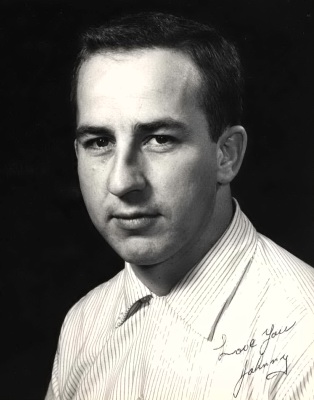
Today's post is dedicated to my Cousin, John William Butler, who passed away last week. John was my namesake and was a great influence on me from the time I can first remember. I was privileged to be asked to speak at the funeral. In his honor, I wrote the following poem comparing life to a journey. John loved to travel. He made many trips abroad and met many different people. But the place he loved the best was home (Tallahassee, Florida) and his favorite people were his family and dear friends.
Life is a Journey
For John William Butler May 29, 2006
By John R. Wible
“Life is a journey,” so they say, with fits and starts at break of day,
And many’ a stop along the way, yes, “life’s a journey,” so they say.
And, as we trav’l our measured road and walk the miles by episode,
Beside come friends to share the load as we travel our measured road.
 Loved ones dear, our cause to sing as our seasons move past spring,
Who to our lives true focus bring, these loved ones dear, our cause to sing.
And all the places we may know as our trip moves ‘way past “go,”
Stretch our horizons, Oh, watch them grow! ‘Mid all the places we may know.
 And then we look down to the sand and find the steps where we did stand,
Those prints to the next one we must hand as we look down into the sand.
And those steps stay but for a while and help the dear ones, bring a smile,
And then – they fade from mile to mile, those steps that stay but for a while.
Last, we find the place loved best of near and far between the rest,
Heart’s home is really where we’re blessed. Home – the place we find the best.
Friday, April 21, 2006
Last Will and Testament of Jesus Christ
Our class has finished the Book of Luke and are moving on to Acts. This weeks' lesson is directly about missions. Before we moved on, I wanted to summarize what we learned. Being a lawyer, i decided to do it by drafting the Last Will and Testament of Jesus Christ. That is what follows below. Besure to see the footnotes.
 LAST WILL AND TESTAMENT OF JESUS CHRIST
I, JESUS CHRIST, also known by more than 140 others names including, but not limited to Lord; Master; The Amen; the Faithful and True Witness; Alpha and Omega, First and Last; Only Begotten Son; Word of God; Beloved Son of God; Blessed and Only Potentate; The Bridegroom; Messiah; Anointed One: Chosen One; The Head of the Church; Consolation of Israel; Emmanuel/Immanuel, God with us; Savior; Messiah; King; being of sound and disposing mind and memory and over the age of eighteen (18) years and not being actuated by any duress, menace, fraud, mistake, or undue influence, do hereby make, publish, and declare this to be my last Will, hereby expressly revoking all Wills and Codicils to Wills previously made by me.
I. PARTIES
I declare that I am not now and have never been married.[1] However, my Father in Heaven is preparing a spiritual Bride for me[2]. I declare that I have no physical children. I declare that I have one Father, known alternately, among others as God, Elohim, YHWH, Jehovah, Adonai, Theos, Deus, hereinafter referred to as my Father in Heaven.
I declare that my Mother is Mary of Nazareth, of the Tribe of Judah, a descendant of King David, hereinafter referred to as “my Mother.” I further acknowledge her husband, Joseph, Son of Heli[3] my Earthly guardian and mentor who predeceased me. I acknowledge my Earthly brothers, among them are: James, Joseph, Simon, and Judas[4] and my sisters whose names and number I pretermit here.
II. BEQUESTS:
It is my intention by the making of this Will to dispose of all the possessions that have been entrusted to me by my Father in Heaven of which I am permitted to dispose. I hereby will, devise, give, and bequeath unto the persons named below, if he or she survives me, the Property described below:
1. To my Mother, I leave the remaining portion of the gold, frankincense and myrrh brought to me by the Persian Wise Men [5] and the memory of all that has happened that she may ponder them and treasure them in her heart. [6]
2. To my brothers and sisters in Nazareth, I declare that I no Earthly property to leave, no home or place to lay my head.[7]
3. To the angels attending my birth, I leave the promise of my return to their presence as they are eternally with my Father in Heaven.[8]
4. To the Shepherds also in attendance, I leave the joy they knew that night which shall never diminish but shall only grow and grow.[9]
5. To Simeon and Anna in the Temple of Jerusalem, who predeceased me, I have already given the right to be with my Father in Heaven based on their faithfulness and recognition of me.[10]
6. To my boyhood friends in Nazareth, I leave the happy memories of joyous days of childhood and my thanks for their friendship. I further leave my regrets that they later in life rejected me to their own detriment. [11]
7. To the Rabbis in Jerusalem who listened to me as a 12 year old boy, I leave my thanks for their attention and tolerance with the childish questions of a neophyte learner.[12]
8. To the people of Capernaum, I leave my thanks for allowing me to live among them and for hearing my gospel.[13]
9. To Simon Peter I leave forgiveness three times over and the keys to the Kingdom of the ministry to the Jews.[14]
10. To my other disciples, hereinafter referred to with Simon Peter as the Twelve, namely: Andrew, James, John, Phillip, Bartholomew, Matthew, Thomas, James Ben Alphaeus and Simon Zealotes, I leave the seeds which I planted in them.[15]
11. To the people at the mount, I leave the truths I taught them.[16]
12. To the Roman Centurion, I leave a healthy servant[17]
13. To the followers of John the Baptist, I leave my thanks for preparing the Way.[18]
14. To “Sinful Woman” at the Pharisee’s house, I leave a legacy of remembrance that will endure as long as does the Bible.[19]
15. To Legion, the Gadarene Demoniac, I leave freedom from the chains of demonic possession.[20]
16. To Jarius’ daughter, I leave life.[21]
17. To the woman with the discharge of blood, I leave healing that shall never end.[22]
18. To the 5,000 who I feed, I leave my Body which is broken for them – take and eat. [23]
19. To my 72 ambassadors, I leave the ability to live as sheep among a world of wolves.[24]
20. To Mary, Martha and Lazarus, I leave my friendship which shall endure the test of time.[25]
21. To the Pharisees, I leave the meaning of the parables of the 3 lost things and my sadness that they led in error.[26]
22. To the ten lepers, I leave healing as white as snow. Though their sins be red like crimson, they shall be as wool.[27]
23. To all the little children, I leave the ability to enter the Kingdom of Heaven and declare that unless all of us become like them, we shall not so do.[28]
24. To the Blind Beggar on the Jericho Road, I leave sight greater than that of most men.[29]
25. To Zacchaeus, I leave an open invitation to “dinner at my place.”[30]
26. To the Temple Authorities in Jerusalem, I leave great regret that you along with the Sadducees, Pharisees, Levites and Priests missed the great blessing that my Father in Heaven had for the people whom you led.[31]
27. To the Widow who gave the mite, I leave the knowledge that the mite has grown to a talent and to a gerah as your example lives from generation to generation.[32]
28. To Judas who betrayed me, I leave the woe you have brought upon yourself.[33]
29. To the soldiers and authorities who arrested me and the Romans who crucified me, I leave my forgiveness, you did not know what you were doing.[34]
30. To Simon the Cyrene, I leave the blessing of carrying someone else’s cross.[35]
31. To Pilate and Herod, I leave the knowledge that you shall be judged as you have judged. [36]
32. To Nicodemus and Joseph of Arimathea, I leave the blessing having known the Truth and having buried it, seen it live again.[37]
33. To the women who buried me and then found me go, I leave that eternal joy you first knew when you realized that I was risen just as I said.[38]
34. To the relatives on the Road to Emmaus, I leave the teaching and the bread that shall never go stale.[39]
III. LAST INSTRUCTIONS – COMMISSION
I declare that it is my desire and my commandment that you and each of you love one another as I have loved you and that as you go out into Jerusalem, Judea and Samaria and even on to the ends of the world, that you will take Me with you and break me off and give me away to all those you meet that you all may come to live with me in Father’s house where there are many mansions.[40]
XII. SEVERABILITY AND SURVIVAL:
If any part of this Will is declared invalid, illegal, or inoperative for any reason, it is my intent that the remaining parts shall be effective and fully operative, and that any Court so interpreting this Will and any provision in it construe in favor of survival.
IN WITNESS WHEREOF, I, JESUS CHRIST, hereby set my hand to this last Will and Testament. So let it be written, so let it be done.
/S/ JESUS CHRIST_______________________ [Signature]
Witnesses:
Witness our hands and seals.
/S/ God the Father
/S/ God the Holy Spirit
[1] Assertions in The DiVinci Code notwithstanding
[2] Rev. 21:9
[3] Luke 3:23
[4] Matt. 13:55
[5] Matt. 2:11
[6] Luke. 2:19
[7] Matt. 8:20
[8] Luke 2:9-13
[9] Luke 2:8-10
[10] Luke 2:25-39
[11] Luke 2:41 and 4:14
[12] Luke 2:49
[13] Luke 4:24
[14] Matt. 16:19; Luke 5:8, 22:54, 24:12; John 25:15-18
[15] Luke 6:13-16
[16] Luke 6:20
[17] Luke 7:1
[18] Luke 7:18
[19] Luke 7:36
[20] Luke 8:26
[21] Luke 8:40
[22] Luke 8:43
[23] Luke 9:13
[24] Luke 10:1
[25] Luke 10:38
[26] Luke 14:1; 15:1
[27] Luke 17:11
[28] Luke 18:15
[29] Luke 18:35; 23:26
[30] Luke 19:12
[31] Luke 20:11
[32] Luke 21:1
[33] Luke 22:1
[34] Luke 22:47; 22:63
[35] Luke 23:6
[36] Luke, Chapter 23
[37] Luke 23:50
[38] Luke 22:55
[39] Luke 24:13
[40] Matt. 28:19:20; Acts 1:8
 LAST WILL AND TESTAMENT OF JESUS CHRIST
I, JESUS CHRIST, also known by more than 140 others names including, but not limited to Lord; Master; The Amen; the Faithful and True Witness; Alpha and Omega, First and Last; Only Begotten Son; Word of God; Beloved Son of God; Blessed and Only Potentate; The Bridegroom; Messiah; Anointed One: Chosen One; The Head of the Church; Consolation of Israel; Emmanuel/Immanuel, God with us; Savior; Messiah; King; being of sound and disposing mind and memory and over the age of eighteen (18) years and not being actuated by any duress, menace, fraud, mistake, or undue influence, do hereby make, publish, and declare this to be my last Will, hereby expressly revoking all Wills and Codicils to Wills previously made by me.
I. PARTIES
I declare that I am not now and have never been married.[1] However, my Father in Heaven is preparing a spiritual Bride for me[2]. I declare that I have no physical children. I declare that I have one Father, known alternately, among others as God, Elohim, YHWH, Jehovah, Adonai, Theos, Deus, hereinafter referred to as my Father in Heaven.
I declare that my Mother is Mary of Nazareth, of the Tribe of Judah, a descendant of King David, hereinafter referred to as “my Mother.” I further acknowledge her husband, Joseph, Son of Heli[3] my Earthly guardian and mentor who predeceased me. I acknowledge my Earthly brothers, among them are: James, Joseph, Simon, and Judas[4] and my sisters whose names and number I pretermit here.
II. BEQUESTS:
It is my intention by the making of this Will to dispose of all the possessions that have been entrusted to me by my Father in Heaven of which I am permitted to dispose. I hereby will, devise, give, and bequeath unto the persons named below, if he or she survives me, the Property described below:
1. To my Mother, I leave the remaining portion of the gold, frankincense and myrrh brought to me by the Persian Wise Men [5] and the memory of all that has happened that she may ponder them and treasure them in her heart. [6]
2. To my brothers and sisters in Nazareth, I declare that I no Earthly property to leave, no home or place to lay my head.[7]
3. To the angels attending my birth, I leave the promise of my return to their presence as they are eternally with my Father in Heaven.[8]
4. To the Shepherds also in attendance, I leave the joy they knew that night which shall never diminish but shall only grow and grow.[9]
5. To Simeon and Anna in the Temple of Jerusalem, who predeceased me, I have already given the right to be with my Father in Heaven based on their faithfulness and recognition of me.[10]
6. To my boyhood friends in Nazareth, I leave the happy memories of joyous days of childhood and my thanks for their friendship. I further leave my regrets that they later in life rejected me to their own detriment. [11]
7. To the Rabbis in Jerusalem who listened to me as a 12 year old boy, I leave my thanks for their attention and tolerance with the childish questions of a neophyte learner.[12]
8. To the people of Capernaum, I leave my thanks for allowing me to live among them and for hearing my gospel.[13]
9. To Simon Peter I leave forgiveness three times over and the keys to the Kingdom of the ministry to the Jews.[14]
10. To my other disciples, hereinafter referred to with Simon Peter as the Twelve, namely: Andrew, James, John, Phillip, Bartholomew, Matthew, Thomas, James Ben Alphaeus and Simon Zealotes, I leave the seeds which I planted in them.[15]
11. To the people at the mount, I leave the truths I taught them.[16]
12. To the Roman Centurion, I leave a healthy servant[17]
13. To the followers of John the Baptist, I leave my thanks for preparing the Way.[18]
14. To “Sinful Woman” at the Pharisee’s house, I leave a legacy of remembrance that will endure as long as does the Bible.[19]
15. To Legion, the Gadarene Demoniac, I leave freedom from the chains of demonic possession.[20]
16. To Jarius’ daughter, I leave life.[21]
17. To the woman with the discharge of blood, I leave healing that shall never end.[22]
18. To the 5,000 who I feed, I leave my Body which is broken for them – take and eat. [23]
19. To my 72 ambassadors, I leave the ability to live as sheep among a world of wolves.[24]
20. To Mary, Martha and Lazarus, I leave my friendship which shall endure the test of time.[25]
21. To the Pharisees, I leave the meaning of the parables of the 3 lost things and my sadness that they led in error.[26]
22. To the ten lepers, I leave healing as white as snow. Though their sins be red like crimson, they shall be as wool.[27]
23. To all the little children, I leave the ability to enter the Kingdom of Heaven and declare that unless all of us become like them, we shall not so do.[28]
24. To the Blind Beggar on the Jericho Road, I leave sight greater than that of most men.[29]
25. To Zacchaeus, I leave an open invitation to “dinner at my place.”[30]
26. To the Temple Authorities in Jerusalem, I leave great regret that you along with the Sadducees, Pharisees, Levites and Priests missed the great blessing that my Father in Heaven had for the people whom you led.[31]
27. To the Widow who gave the mite, I leave the knowledge that the mite has grown to a talent and to a gerah as your example lives from generation to generation.[32]
28. To Judas who betrayed me, I leave the woe you have brought upon yourself.[33]
29. To the soldiers and authorities who arrested me and the Romans who crucified me, I leave my forgiveness, you did not know what you were doing.[34]
30. To Simon the Cyrene, I leave the blessing of carrying someone else’s cross.[35]
31. To Pilate and Herod, I leave the knowledge that you shall be judged as you have judged. [36]
32. To Nicodemus and Joseph of Arimathea, I leave the blessing having known the Truth and having buried it, seen it live again.[37]
33. To the women who buried me and then found me go, I leave that eternal joy you first knew when you realized that I was risen just as I said.[38]
34. To the relatives on the Road to Emmaus, I leave the teaching and the bread that shall never go stale.[39]
III. LAST INSTRUCTIONS – COMMISSION
I declare that it is my desire and my commandment that you and each of you love one another as I have loved you and that as you go out into Jerusalem, Judea and Samaria and even on to the ends of the world, that you will take Me with you and break me off and give me away to all those you meet that you all may come to live with me in Father’s house where there are many mansions.[40]
XII. SEVERABILITY AND SURVIVAL:
If any part of this Will is declared invalid, illegal, or inoperative for any reason, it is my intent that the remaining parts shall be effective and fully operative, and that any Court so interpreting this Will and any provision in it construe in favor of survival.
IN WITNESS WHEREOF, I, JESUS CHRIST, hereby set my hand to this last Will and Testament. So let it be written, so let it be done.
/S/ JESUS CHRIST_______________________ [Signature]
Witnesses:
Witness our hands and seals.
/S/ God the Father
/S/ God the Holy Spirit
[1] Assertions in The DiVinci Code notwithstanding
[2] Rev. 21:9
[3] Luke 3:23
[4] Matt. 13:55
[5] Matt. 2:11
[6] Luke. 2:19
[7] Matt. 8:20
[8] Luke 2:9-13
[9] Luke 2:8-10
[10] Luke 2:25-39
[11] Luke 2:41 and 4:14
[12] Luke 2:49
[13] Luke 4:24
[14] Matt. 16:19; Luke 5:8, 22:54, 24:12; John 25:15-18
[15] Luke 6:13-16
[16] Luke 6:20
[17] Luke 7:1
[18] Luke 7:18
[19] Luke 7:36
[20] Luke 8:26
[21] Luke 8:40
[22] Luke 8:43
[23] Luke 9:13
[24] Luke 10:1
[25] Luke 10:38
[26] Luke 14:1; 15:1
[27] Luke 17:11
[28] Luke 18:15
[29] Luke 18:35; 23:26
[30] Luke 19:12
[31] Luke 20:11
[32] Luke 21:1
[33] Luke 22:1
[34] Luke 22:47; 22:63
[35] Luke 23:6
[36] Luke, Chapter 23
[37] Luke 23:50
[38] Luke 22:55
[39] Luke 24:13
[40] Matt. 28:19:20; Acts 1:8
Subscribe to:
Posts (Atom)


